First aid training: what the arrêté du 7 juillet 2026 (order of 7 July 2026) changes
Written by Cyrille GAGNAIRE, France Défibrillateur. Published on 28 July 2026.
An arrêté du 7 juillet 2026 (French ministerial order of 7 July 2026), published in the Journal officiel n°0161 of 11 July 2026, replaces the recommendations on first aid with binding national technical references. Behind this change of vocabulary lies a very concrete reality for any employer or operator of an ERP (French public-access building) who has staff trained: the content of GQS, PSC and PSE sessions now rests on a single framework that applies to every approved training body.
Recommendations that have become binding
Until now, the teaching content of first aid training was based on recommendations set out in the arrêtés du 15 juin 2024 (orders of 15 June 2024). The order of 7 July 2026 (NOR INTE2618304A) replaces them with national technical references, known by the French acronym RTN. The shift in wording is anything but trivial. A recommendation guides, whereas a national technical reference is mandatory. The French Ministry of the Interior is therefore strengthening the legal certainty of the first aid training system and harmonising requirements across approved bodies, whether they belong to the public civil protection sector or to the private sector, throughout the country.
For an operator, the practical consequence fits into a single sentence: the framework applied by your provider is no longer an internal teaching choice, it is a national standard. You can therefore ask your training body to confirm in writing that it is working from the new annexes, and have that statement included in the training agreement or the purchase order. It is the simplest document to produce in the event of an inspection or a question from an insurer.
The three annexes and the courses they cover
The text is organised into annexes, each corresponding to one level of training. Identifying the right line lets you check immediately that the programme offered by your provider genuinely matches what your teams need.
Trainer courses, FPSC and FPSE, do not have a dedicated annexe: they combine several annexes depending on the level targeted. This point mainly concerns large groups and local authorities that train their own session leaders in house. If that is your situation, have your internal materials revalidated against the new references before the next trainer intake.
| Annexe of the order | Course covered | Stream |
|---|---|---|
| Annexe 1 | Life-saving skills awareness (GQS) | Citizen |
| Annexe 2 | Citizen first aid (PSC) | Citizen |
| Annexe 3 | Team first aid levels 1 and 2 (PSE1, PSE2) | Civil protection operational |
| Combination of annexes | Trainer courses (FPSC, FPSE) | Depending on the level targeted |
What to do about sessions already booked
The order was published in the Journal officiel n°0161 of 11 July 2026 and applies immediately. If you have booked sessions for the autumn or the final quarter, they will therefore be delivered under the new framework, even if the quotation was signed before the summer. No particular step falls to you as a customer, but one check is essential: call your training body and ask whether its teaching materials and its trainers have been updated. A reputable provider will answer plainly and send you the revised programme.
A second useful reflex is to record the session date in your internal records. Courses delivered from July 2026 onwards fall under the RTN, while earlier ones fell under the 2024 recommendations. This distinction will spare you pointless discussions during an audit or an insurance renewal. A single extra column in your certification tracking table is enough.
Finally, keep an eye out for any implementing circular, which would set out the practical arrangements for the transition. Your training body is best placed to alert you if one is issued.
The text does not change your equipment obligations
An important point not to confuse: this order concerns first aid training references, not the obligation to install defibrillators. The equipment timetable for public-access establishments remains the familiar one, with category 1 to 3 ERP equipped since 1 January 2020, category 4 since 2021 and certain category 5 ERP since 2022. If your establishment falls within that scope, your equipment roadmap is unchanged.
The two subjects do come together in the field, however. A defibrillator installed in a corridor is only useful if somebody dares to open the cabinet. That is precisely the purpose of the courses covered by the new annexes: giving ordinary employees the reflexes of raising the alarm, performing chest compressions and using the device. With around 50,000 cardiac arrests a year in France and roughly 10 % of survival chances lost per minute without defibrillation, the question is never about the device alone.
Where DAE (AED) awareness training fits in
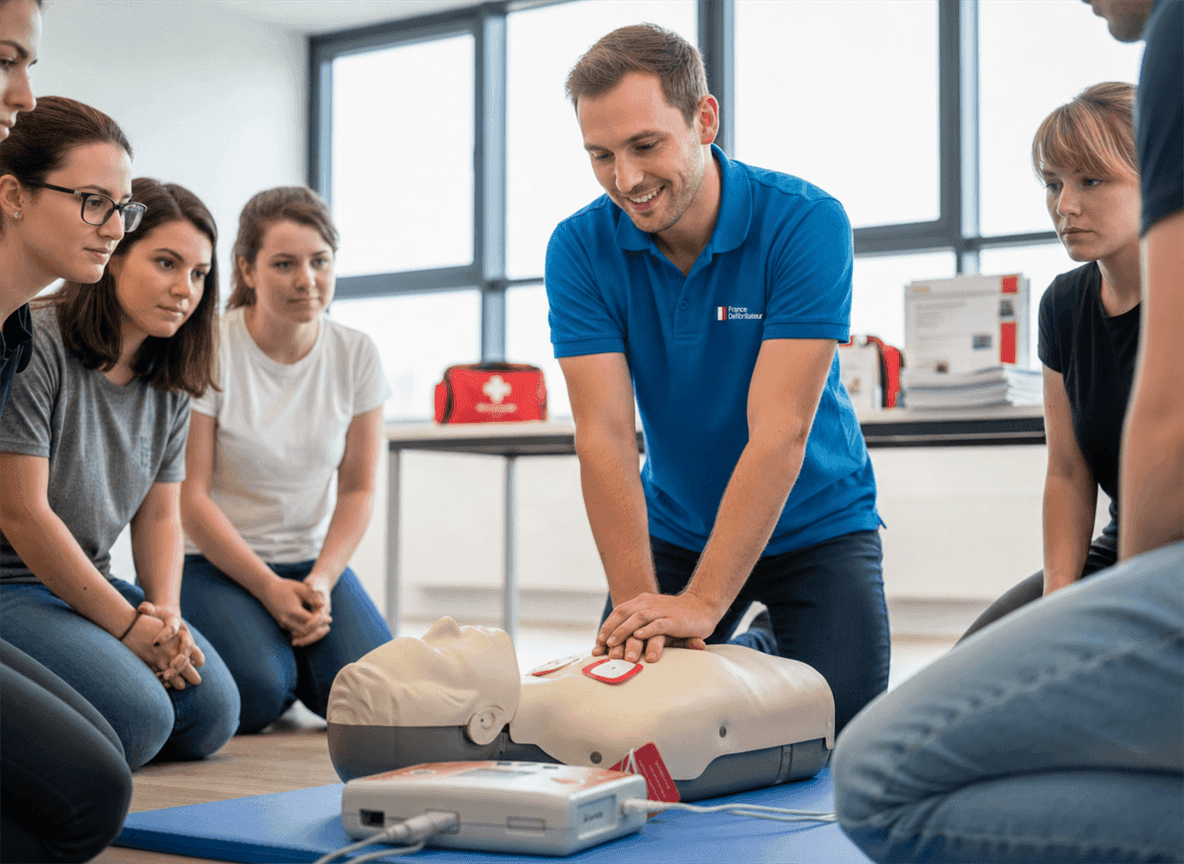
Life-saving skills awareness, covered by annexe 1, is the shortest format and the easiest to roll out across a large workforce. It is often the best entry point for a shop, a practice, a gym or a small ERP: a few hours, all staff, and genuine hands-on use of the device installed on site. Citizen first aid, covered by annexe 2, is aimed rather at employees appointed as designated responders, who then become the internal point of contact in an emergency.
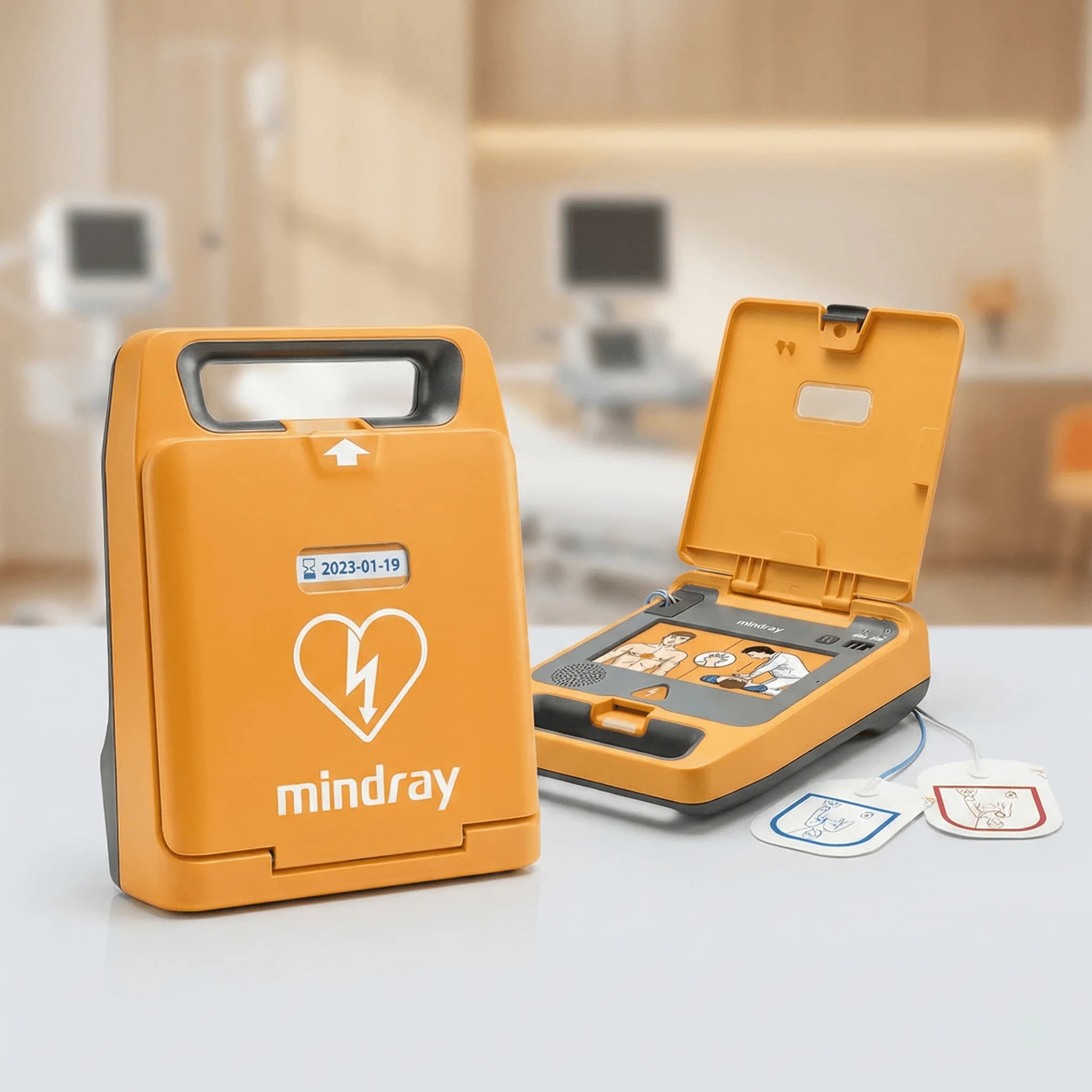
One operational recommendation that costs nothing: have the session run on site, using the defibrillator actually installed in your building rather than only the trainer's teaching equipment. Your teams then memorise where the cabinet is, the route to reach it, the sound of the alarm and the placement of the pads. That is the detail that saves the seconds that matter.
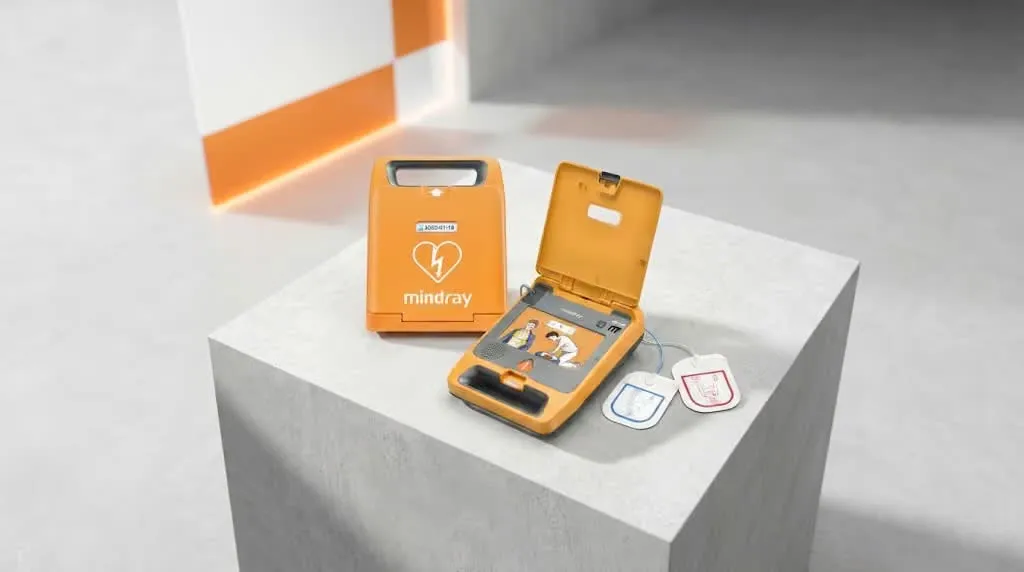
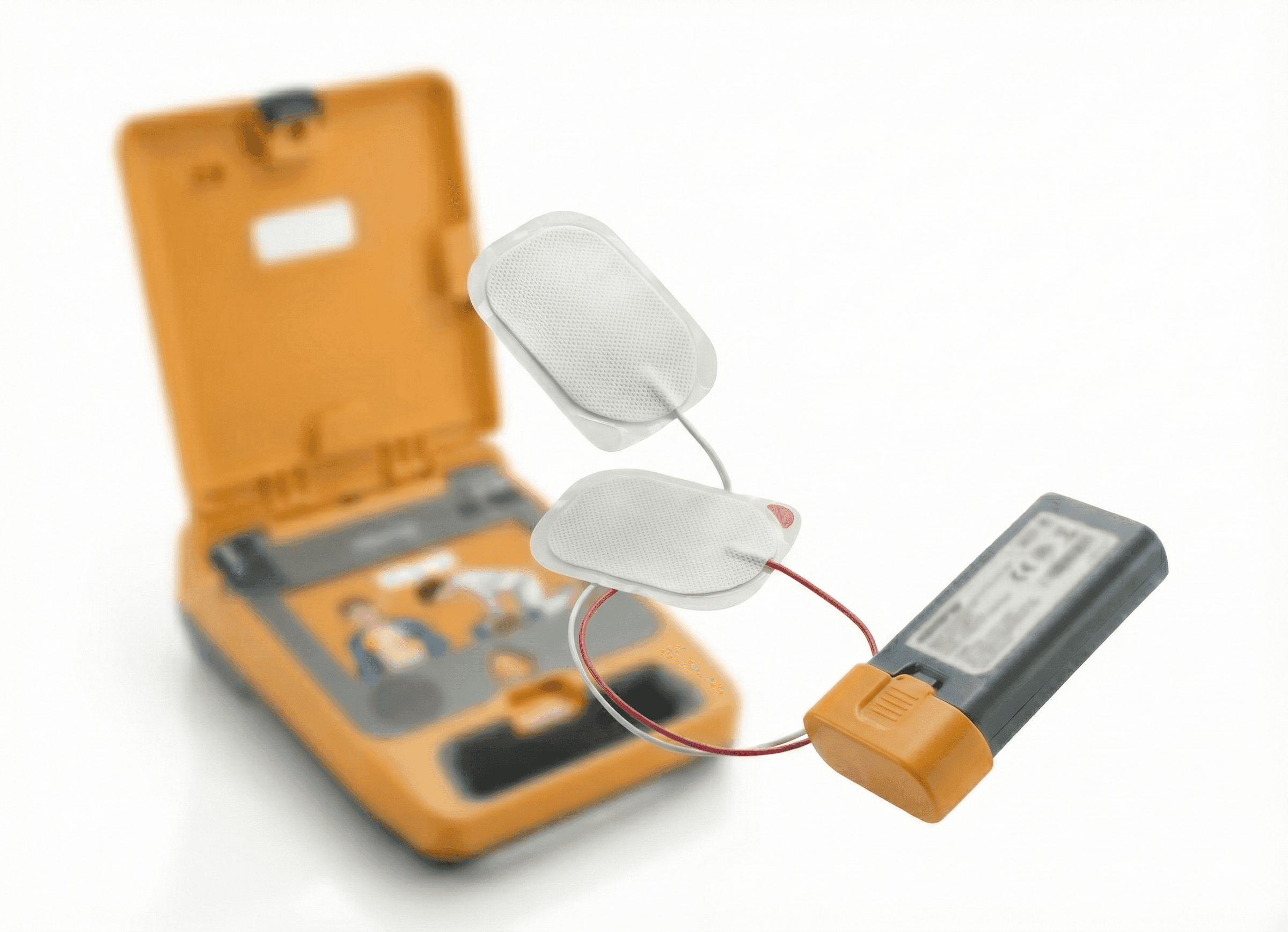
Take advantage of the trainer's visit to review the condition of the device as well. Pads last 2 to 5 years, batteries 3 to 5 years, and a well-maintained defibrillator stays in service for 8 to 10 years, sometimes longer. We set out these timescales in our article on the service life of a defibrillator, its pads and its batteries.
Three checks before signing your next agreement
First, approval. The new framework applies to every approved or accredited body delivering GQS, PSC or PSE1 and PSE2 courses. Ask for your provider's approval reference and check that it does cover the teaching unit you are buying. Next, the programme: it must refer explicitly to the national technical references, not to the earlier recommendations. Finally, consistency with your own equipment: the trainer should know the type of device you have.
For establishments that have not yet taken the step of equipping themselves, the arrival of a new training framework is a good moment to deal with both subjects together. Rental from 50 euros excl. VAT per month, maintenance included, makes it possible to equip your site without tying up cash, with delivery within 2 to 5 working days. Our advisers issue a quotation within 24 hours and can coordinate installation with the date of your training session.
Frequently asked questions
Which courses are affected by the order of 7 July 2026?
The order covers life-saving skills awareness (GQS) in annexe 1, citizen first aid (PSC) in annexe 2, and team first aid levels 1 and 2 (PSE1 and PSE2) in annexe 3. The FPSC and FPSE trainer courses combine several annexes depending on the level targeted.
Is a national technical reference different from a recommendation?
Yes. The former recommendations, set out in the arrêtés du 15 juin 2024 (orders of 15 June 2024), guided the content of training. The national technical references introduced by the order of 7 July 2026 are binding, and therefore legally enforceable for approved bodies. The Ministry of the Interior is thus harmonising requirements across all bodies, public and private alike.
Do employees who have already been trained need to retake a session?
The order sets the references applicable to training delivered by approved bodies. As for the validity of certificates obtained before its publication, put the question directly to your training body, which follows the subject and will tell you whether an implementing circular sets out the transition arrangements.
Does this order change the obligation to install a defibrillator?
No. This text concerns first aid training references. The equipment obligations for public-access establishments remain those already in force, with category 1 to 3 ERP equipped since 1 January 2020, category 4 since 2021 and certain category 5 ERP since 2022.
How can I check that my training body is applying the new framework?
Ask it for its approval reference, the detailed programme for the session and written confirmation that it is working from the national technical references of the order of 7 July 2026. Those three items fit into a single email and are enough to document your approach in your internal records.
Planning an AED project?
Purchase, rental from 50 EUR excl. VAT per month, installation with GéoDAE registration, servicing and training: our team replies within 24 hours.