Cardiac arrest: common myths about defibrillators
Written by Cyrille GAGNAIRE, France Défibrillateur. Published on 14 August 2026.
Poor chest compressions would be better than a defibrillator used by a novice. The electric shock could make the victim worse. These beliefs have circulated for years and still delay the gesture that saves lives. Yet automated external defibrillators were designed from the start to be used by the first bystander present, trained or not. Here is what the technical reality and the figures say about six myths that still hold back public intervention during a cardiac arrest.
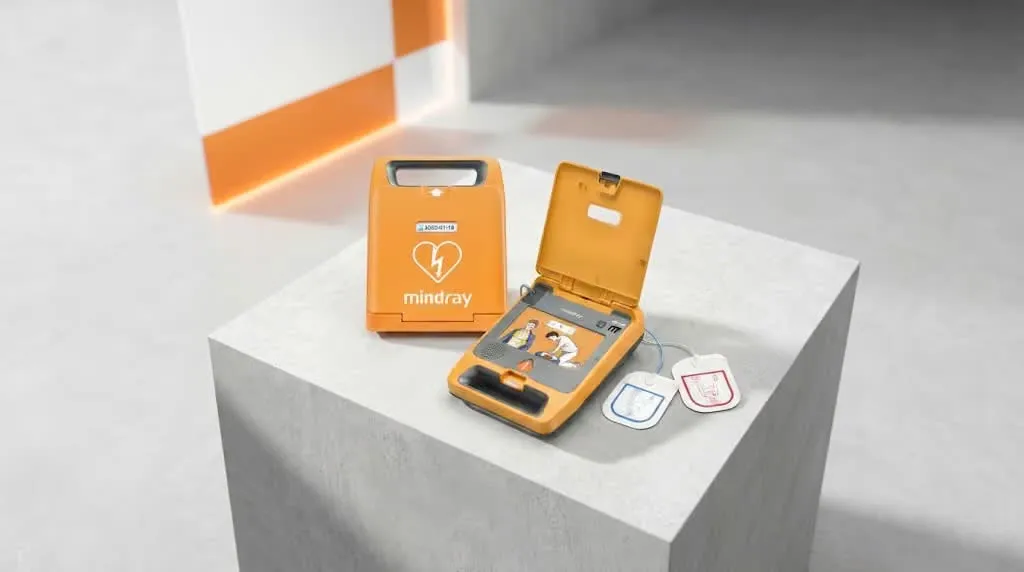
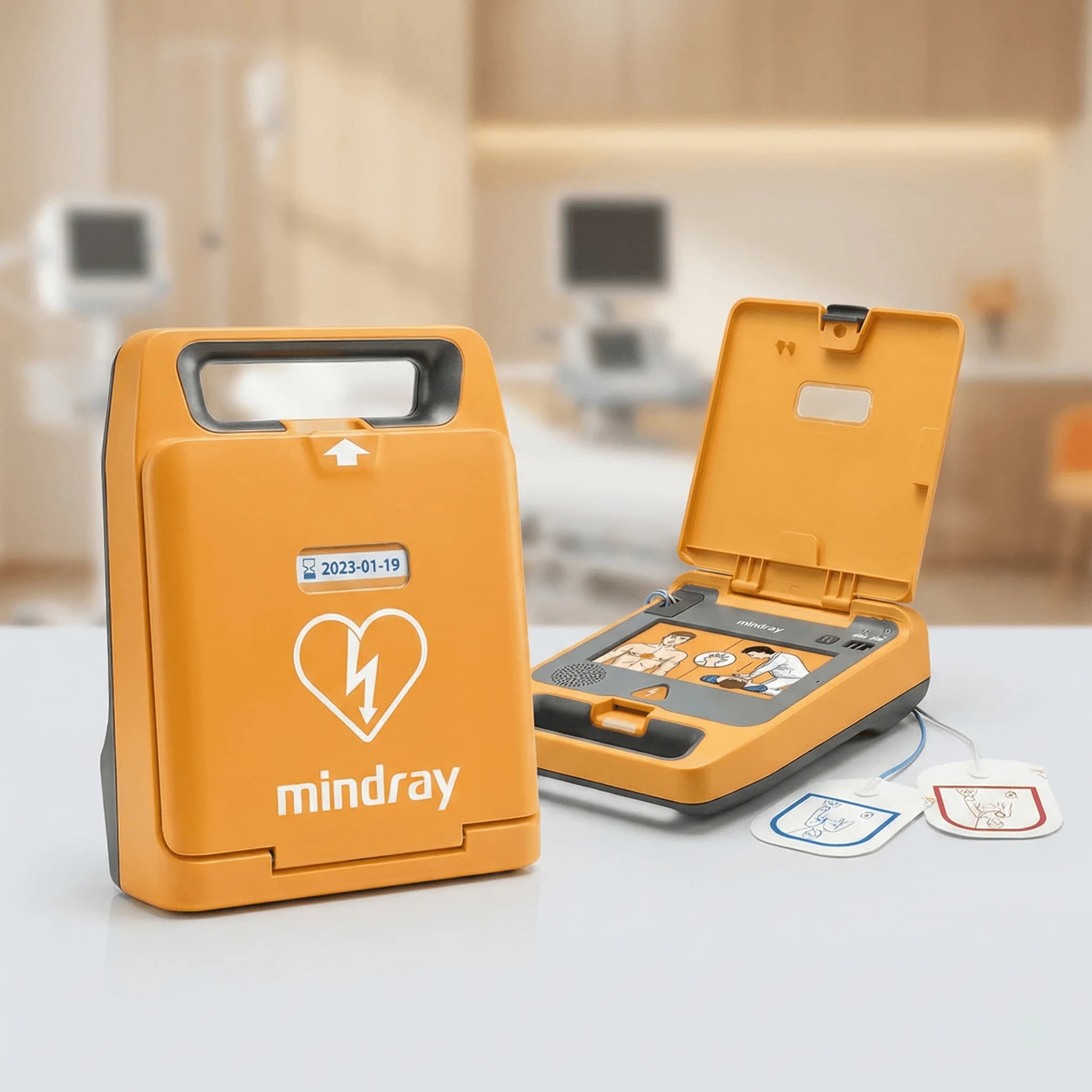
A defibrillator cannot be used without medical training
This is the most common and most dangerous myth, because it keeps bystanders as onlookers out of fear of doing something wrong. An automated external defibrillator, AED, gives voice instructions for every step, from unwrapping the electrode pads to the moment everyone must step back for the shock. No medical knowledge is required to trigger it, the device takes charge of the sequence.
In France, an automated external defibrillator can be used by anyone, trained or not in first aid, on a person in cardiac arrest. Training courses exist to build ease, speed and confidence with the chest compressions that go alongside it, not because they are a mandatory requirement to operate the device.
The device might shock by mistake and worsen the victim's condition
An automated external defibrillator continuously analyses the victim's heart rhythm before proposing anything at all. If that rhythm is not recognised as shockable, the device delivers no shock, no matter what the operator does with the button provided for that purpose. The risk of an unnecessary or dangerous shock to a conscious person, or to someone whose heart is beating normally, is therefore practically ruled out by the device's own design.
This automatic analysis is what separates public-access defibrillators from the manual equipment used in resuscitation, which requires an expert reading of the cardiac trace by a professional. The AED (défibrillateur automatisé externe in French) remains an ally for the bystander, never an added risk for the person they are trying to help.
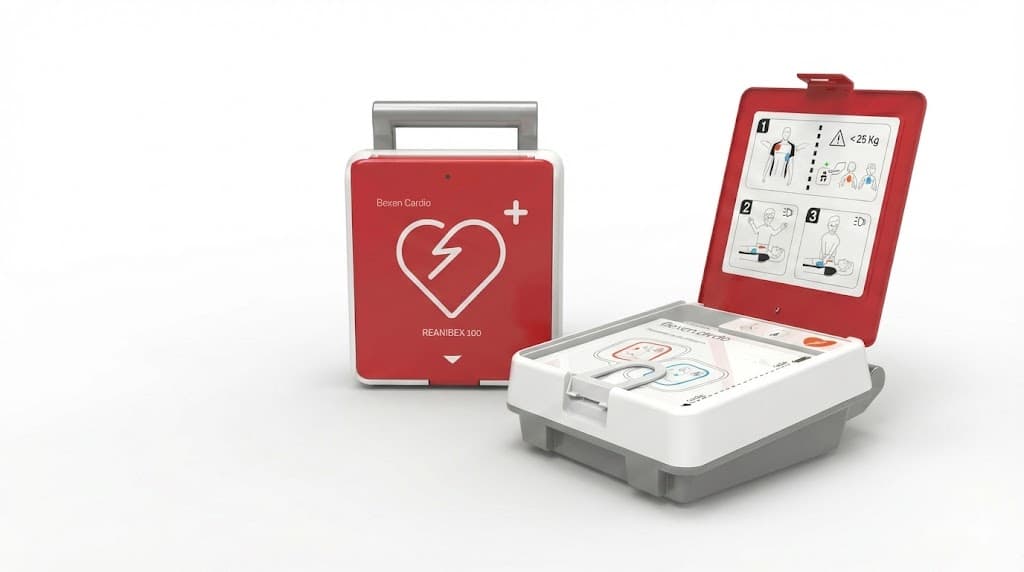
A defibrillator restarts a stopped heart
The phrase makes sense in everyday speech, but it describes poorly what actually happens during the intervention. During cardiac arrest, the heart does not always stop completely, it can fibrillate, meaning it contracts chaotically and is entirely ineffective at moving blood. The electric shock interrupts that chaotic activity to give the heart a chance to recover a normal rhythm on its own.
If the heart has no electrical activity at all, no shock can artificially restart it. This is why cardiopulmonary resuscitation, compressions and rescue breaths, remains essential before, during and after the defibrillator is used, to keep some circulation flowing to the victim's brain.
Cardiac arrest mainly affects older people or those with a known heart condition
Around 50,000 cardiac arrests occur every year in France, and a significant share affects young, athletic people with no known history known to those around them. A stadium, an office, a classroom or a local shop can all be affected just as much as a healthcare facility, with nothing to have foreseen it.
This is precisely why regulations now require a defibrillator in a wide range of public-facing establishments, from town halls to sports clubs, schools, shops and hotels, regardless of the usual profile of the people who use them.
It is better to wait for emergency services before intervening
Every minute that passes without defibrillation reduces the chances of survival by about 10 percent. Professional emergency services, even when fast, almost always take longer to arrive than the window during which a bystander can act on the spot. Waiting means letting the most decisive minutes slip away, the ones during which the brain is best protected.
Performing compressions, calling emergency services and using a nearby defibrillator are complementary actions, never a substitute for professional responders. The bystander who acts replaces no one, they simply buy the time that medical teams will need to arrive and take over under good conditions.
Finding a nearby defibrillator is difficult in an emergency
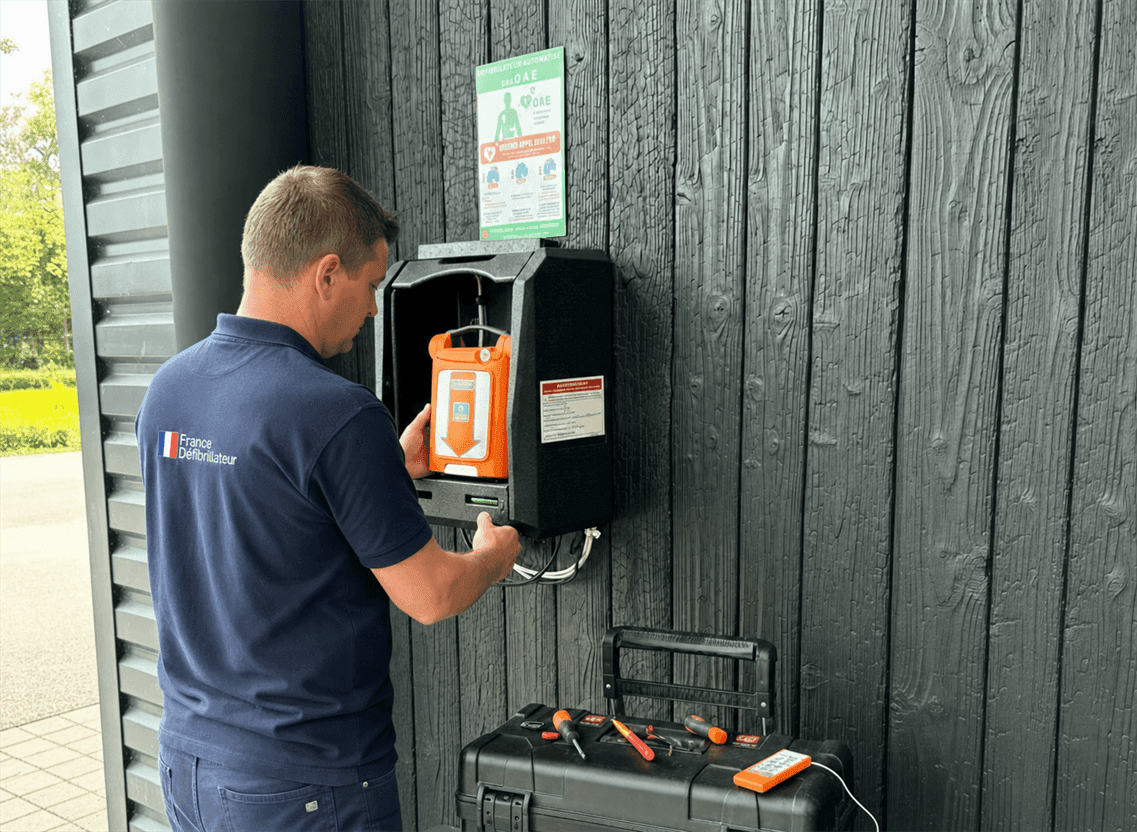
This fear is becoming less and less founded as regulation spreads. Every defibrillator installed in a public-facing establishment must be registered in Géo'DAE, the French national database that records their location and lets emergency services, and sometimes the public, locate the nearest device during an emergency.
Signage, governed by the French order (arrêté) of 29 November 2018, requires visible displays at usual passageways, with dedicated signs and directional arrows leading to the device. A properly registered and signposted defibrillator can be located within seconds, even by someone discovering the premises for the first time.
Frequently asked questions
Can a defibrillator shock a conscious person by mistake?
No. The device analyses the heart rhythm before anything else and only proposes a shock if it detects a genuinely shockable rhythm. On a conscious person, or one whose heart is beating normally, no shock is delivered, even if the operator presses the button provided for that purpose. This built-in safety feature is what allows safe use by the general public.
Do you need training to use an automated external defibrillator?
No, training is not a prerequisite. The device gives voice guidance for every step, from placing the electrode pads to the moment everyone must step back for the shock. First-aid training helps build confidence and speed, especially for the chest compressions that go alongside it, but it is in no way a condition for operating the device in an emergency.
Can a defibrillator restart a heart that has completely stopped?
No, not in every case. The electric shock acts on a heart that is fibrillating, meaning contracting chaotically, by interrupting that activity to give it a chance to recover an effective rhythm. If the heart has no electrical activity left at all, chest compressions remain the only action able to keep blood flowing to the brain while waiting for emergency services.
How much time is there before the chances of survival drop sharply?
Every minute genuinely matters. Chances of survival decrease by about 10 percent for every minute that passes without defibrillation. Since emergency services almost always take several minutes to arrive, the bystander's action on the spot, compressions followed by a defibrillator, remains the factor that weighs most heavily on the outcome for the victim.
How can you find out where the nearest defibrillator is?
Defibrillators installed in public-facing establishments must be registered in Géo'DAE, the French national database, and marked with visible signage compliant with the French order of 29 November 2018. Directional arrows usually guide the way to the device, making it possible to locate it quickly even without prior knowledge of the premises.
Planning an AED project?
Purchase, rental from 50 EUR excl. VAT per month, installation with GéoDAE registration, servicing and training: our team replies within 24 hours.