Who to train in lifesaving skills, and how often
Written by Cyrille GAGNAIRE, France Défibrillateur. Published on 11 August 2026.
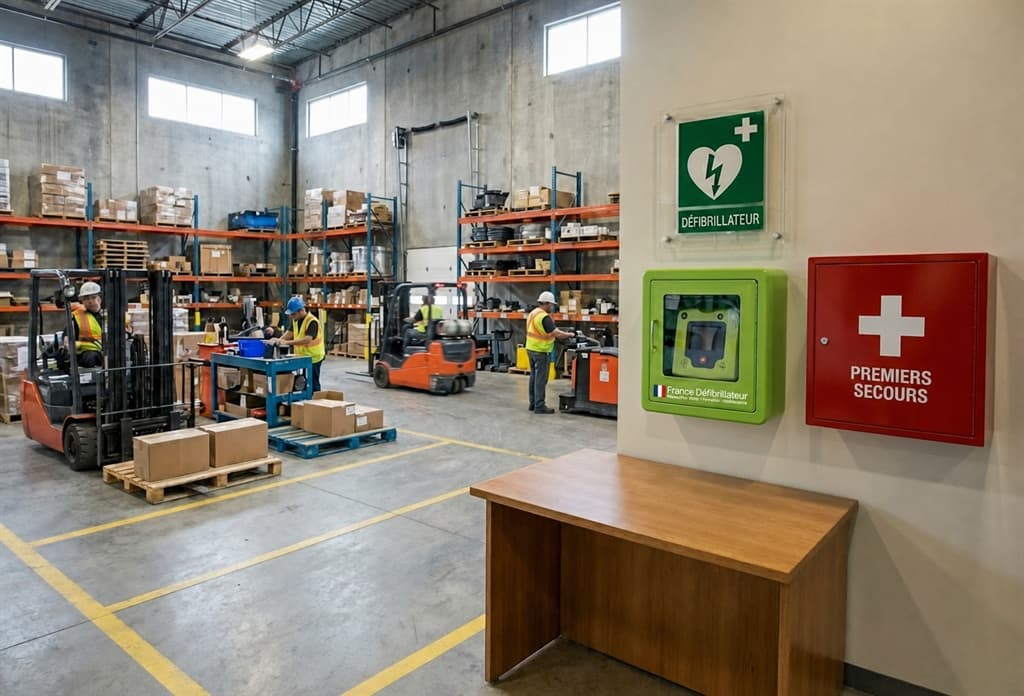
Installing a defibrillator in a corridor is not enough to save a life: someone still has to dare use it the day a cardiac emergency happens. Between a short public awareness session and a professional first-aid course, organisations often hesitate over the level to aim for, who to prioritise, and how often to renew it. This guide helps town halls, businesses, schools and associations build a coherent training policy around their device.
A voice-guided device, but a skill that still has to be learned
An automated external defibrillator (AED) analyses the heart rhythm and talks the user through every step out loud, from placing the pads to delivering a shock if needed. This design lets anyone, even without medical training, use it legally in France. In practice, though, someone who has never handled the device hesitates longer before acting, and that hesitation is costly, since every minute without defibrillation reduces the chances of survival by around 10 percent.
Training part of the staff or volunteers in the chain of survival, calling emergency services, and handling a training defibrillator changes that response time in practice. Training does not replace the device's voice prompts, it removes the doubt that costs the first, decisive seconds.
Lifesaving skills awareness or first-aid certification
A lifesaving skills awareness session covers the essentials in a short slot: recognising cardiac arrest, calling emergency services, starting chest compressions and using a defibrillator. It suits a wide audience and is right for an organisation that wants as many people as possible able to react, without aiming for a professional certification.
A workplace first-aider course, run by accredited training bodies, goes further and includes risk prevention specific to the organisation's activity. It is aimed first at people designated as first-aiders within the business or public body, a role many structures find worth formalising once the defibrillator is installed.
| Training level | Target audience |
|---|---|
| Lifesaving skills awareness | Wide audience, no prerequisites |
| Workplace first-aider course | First-aiders designated within the business |
| Periodic refresher | Previously trained people, to keep reflexes sharp |
Who to train first, depending on the type of site
In a business or shop, people in constant contact with the public or colleagues, front-desk staff, floor managers, team leaders, should be trained first, since they are the ones present when a medical emergency happens. A town hall or local authority might prioritise public-facing staff and the teams running the busiest facilities, a gym, a library or a community hall.
In a school, teachers and pastoral staff benefit from knowing where the defibrillator is and the basic gestures, even without full certification. In a nursing home or a care facility, the question looks different, since part of the medical staff already receives emergency-care training as part of their job, leaving the operator with the task of checking that this training actually covers the defibrillator installed on site.
How often to renew the training
A skill learned and never repeated fades over time. Training providers offer refresher sessions that help people regain the right reflexes, revisit chest compression technique and get hands-on again with a training defibrillator. An organisation that trained part of its staff several years ago should check whether those people are still on site and whether a refresher is due.
The regular updates to resuscitation guidelines issued by scientific societies are another reason to schedule refresher sessions rather than treat initial training as good forever. Tracking this refresher schedule alongside the defibrillator's maintenance stops an organisation ending up with a well-serviced device and staff who have forgotten how to respond.
Running a session without stopping the day-to-day activity
A lifesaving skills awareness session fits into a short time slot, and can also be split into several sessions, which lets a team be trained in rotation without closing a shop or halting an activity. Some training providers come directly to the site with their teaching equipment, which saves staff having to travel and helps more people take part.
Pairing the training session with a walkthrough of the defibrillator actually installed on site, rather than a generic model, helps participants remember the device, its exact location and how it works the day they need it.
The link between training and monitoring the defibrillator
Training staff only makes sense if the defibrillator stays operational between sessions. A device whose self-test flags a fault, or whose pads have expired, undermines the training regardless of how well the gestures were learned. Maintaining the device remains the operator's responsibility, under the French Public Health Code (article R. 5212-25), alongside organising staff training.
An organisation can appoint a single point of contact responsible for tracking both the refresher dates of trained staff and the condition of the defibrillator, which simplifies managing these two complementary duties. This dual oversight forms a coherent pairing, a reliable device in the hands of people who know how to use it without hesitating.
Frequently asked questions
Can an untrained employee legally use a defibrillator?
Yes, French law allows anyone, even without medical training, to use an automated external defibrillator. The device itself analyses the heart rhythm and talks the user through each step out loud. Training is therefore not a legal requirement to act, but it reduces hesitation and the time lost before starting the first gestures.
What is the difference between lifesaving skills awareness and a workplace first-aider course?
Lifesaving skills awareness targets a wide audience on the essential reflexes: alert, compress, defibrillate. A workplace first-aider course goes further by including risk prevention specific to the organisation's activity, and is aimed first at people designated as first-aiders within the business or public body.
Does every member of staff need to be trained?
It is not essential, but training enough people spread across different shifts and roles helps ensure a potential first-aider is almost always present. Staff who deal with the public or hold a supervisory role remain the priority, before gradually widening awareness to the rest of the team.
Who should fund lifesaving skills training in a business?
Organising and funding the training generally falls to the operator or employer, alongside purchasing and maintaining the defibrillator. Some organisations fold this cost into their risk-prevention budget, next to the lease or maintenance contract for the device.
How can you tell if staff trained a long time ago are still up to date?
The simplest approach is to keep a log listing trained staff and the date of their last session, checked regularly alongside the defibrillator's maintenance record. If no refresher has taken place in a long time, or trained staff have since left, a new session is needed.
Planning an AED project?
Purchase, rental from 50 EUR excl. VAT per month, installation with GéoDAE registration, servicing and training: our team replies within 24 hours.