Placing AED pads: wet chest, body hair, pacemaker, patch
Written by Cyrille GAGNAIRE, France Défibrillateur. Published on 26 October 2026.
The defibrillator speaks and guides, but the victim is not always in the position shown in the diagram: wet chest, hairy chest, a pacemaker under the skin, a patch stuck on the chest. These cases confuse bystanders and cost seconds. Yet each minute without defibrillation reduces the chance of survival by about 10%. Here is how to adapt pad placement without ever delaying the shock, and what a site can prepare in advance.
The principle: adapt placement without delaying the shock
Faced with a cardiac arrest, the rule stays the same: call emergency services, start chest compressions, bring the DAE (AED) and place the pads as quickly as possible. The particulars described here are not reasons to wait. They are gestures of a few seconds, done while someone else keeps up the compressions.
Why do these details matter so much? Because poor contact between the pad and the skin is the leading cause of error messages in the field. The device then asks you to check the pads, and every second spent fumbling delays the shock. Knowing the three or four common situations in advance avoids this blockage.
The defibrillator analyses the rhythm itself. It only delivers a shock if the rhythm calls for it, and stays silent otherwise. The bystander therefore does not have to judge the medical situation, only to ensure good contact between the pads and the skin, and to touch no one when the shock is delivered.
Wet chest or victim near water
Water impairs pad adhesion and can disperse the current. If the victim has just been pulled from a pool, a beach or a shower, quickly dry the chest with a cloth, a towel or a piece of clothing before sticking the pads on. A simple rub is enough; there is no need to look for ideal equipment.
Also check that the victim is not lying in a puddle. If so, move them a few metres onto a dry surface, without interrupting the compressions for long. Self-adhesive pads are designed for outdoor use, including in the rain, but the contact with the skin must stay dry and clean. On a metal or wet floor, stepping back during the shock matters even more.
Hairy chest: the razor in the kit
Hair prevents the adhesive of the pads from sticking to the skin. The DAE may then display a poor-contact message or refuse to analyse. Many accessory kits contain a disposable razor and scissors precisely for this case.
The gesture is quick: run the razor over the spot where the pads will go, without aiming for a perfect cut. If no razor is available, press a first pair of pads on firmly, then pull it off with a sharp tug: it takes some of the hair with it. Then place the second pair, if your device supplies one, on the cleared area. If not, shave or cut quickly and stick the pads back on, without wasting time on repeated attempts.
Pacemaker, patch and objects on the skin
A pacemaker or an implanted defibrillator shows as a small bump under the skin, often below the collarbone. In that case, place the pad away from the bump, not directly on it. A medication patch or a plaque stuck on the chest is removed before placement, and the skin wiped if needed.
For jewellery, there is no need to remove everything, but chains or metal pieces under the pads must be moved aside. Underwired bras are removed or cut. The table below sums up the reflexes.
| Situation | Reflex to adopt |
|---|---|
| Wet chest | Dry the skin, move the victim away from puddles |
| Hairy chest | Shave the area with the kit's razor, then stick the pads |
| Bump under the skin (pacemaker) | Place the pad away from the bump |
| Medication patch | Remove the patch, wipe the skin |
| Underwired bra, jewellery | Remove or cut, move metal aside |
Preparing the site and its teams
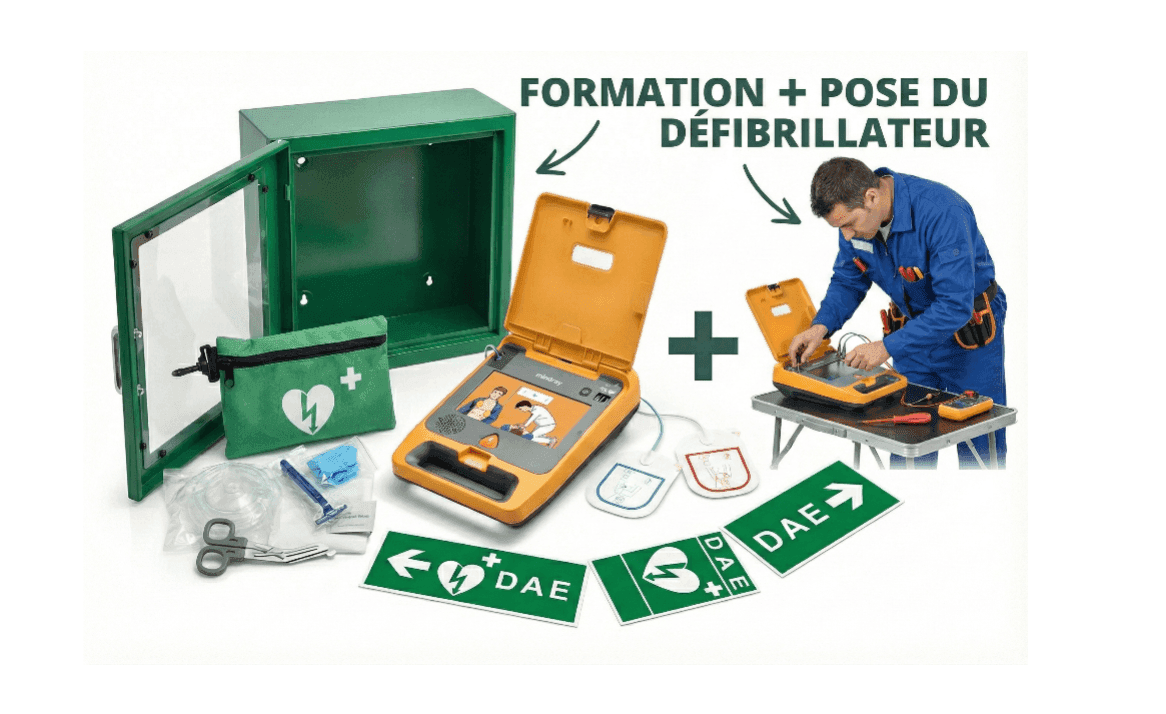
An operator can anticipate these situations. Check that the kit stored with the DAE contains a razor, scissors and an absorbent cloth, and check them at every inspection of the cabinet. Record this check in the safety register, along with the expiry dates of the pads.
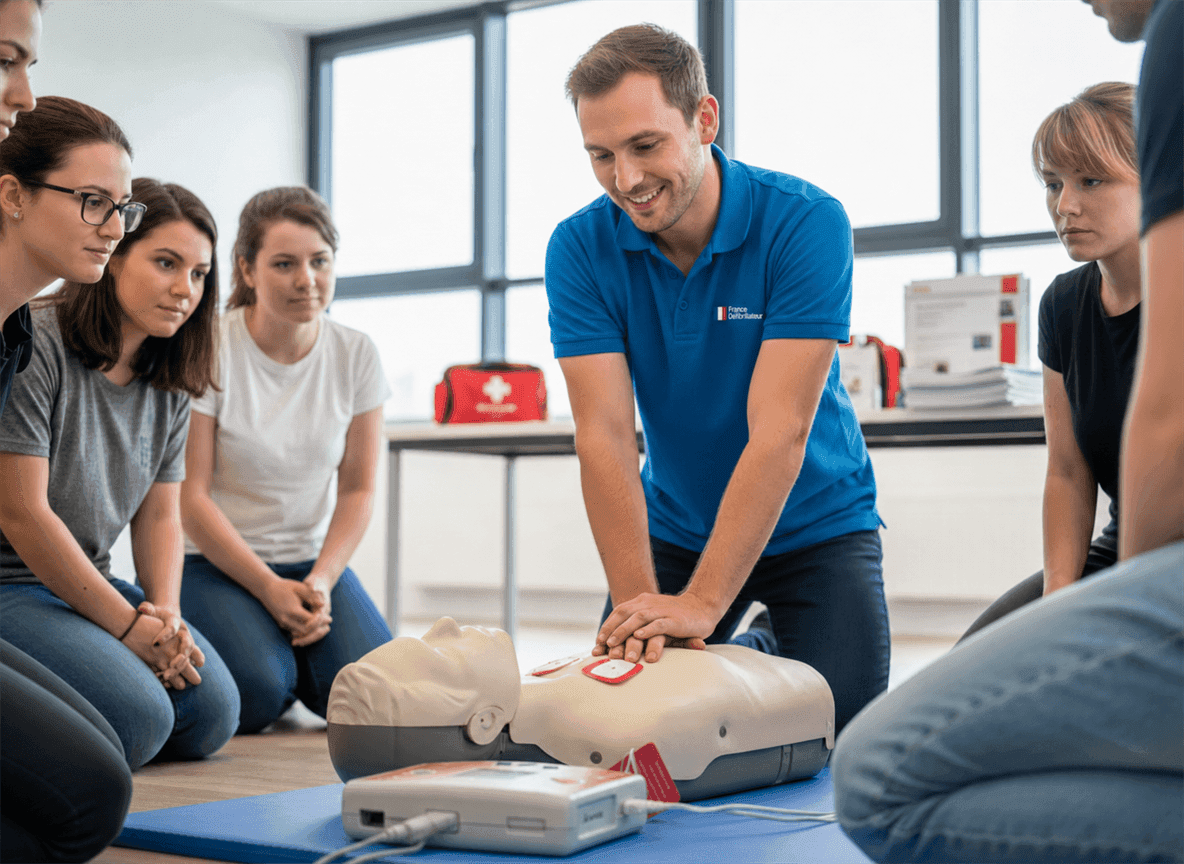
Training plays the main role. During an awareness session, have people handle the razor and simulate a wet chest, so that the gesture becomes a reflex. Manikins let you rehearse placement without stress. A simulation exercise on site quickly reveals whether the kit is complete and whether everyone knows where it is. For a site with water risk, such as a pool, keep a towel in the cabinet.
Finally, think about paediatric pads and situations outside the usual frame: if the patient is a child, follow the instructions of the device and its suitable pads. In every case, the essential is to keep the same line of conduct: call, compress, defibrillate, and let the device guide each step by voice.
Frequently asked questions
Should the chest be dried before placing the pads?
Yes, as far as possible and without wasting time. Wet skin impairs adhesion and can disturb the analysis. A cloth, a towel or a piece of clothing is enough to rub the area for a few seconds before sticking the pads on, then compressions resume until the DAE tells everyone to stand clear.
What if the victim has a lot of chest hair?
Use the razor supplied in the DAE kit to quickly clear the areas where the pads will go. Without a razor, pull off a first pair of pads to remove some of the hair, then place another pair. The goal is clean contact, not a perfect cut.
Can someone with a pacemaker be defibrillated?
Yes. The pacemaker shows as a bump under the skin, near the collarbone. Simply place the pad away from the bump, not on it. The defibrillator remains usable, and its decision to shock rests solely on the analysis of the heart rhythm.
Should a patch on the chest be removed?
Yes. A medication patch or a plaque stuck where the pads go is removed before placement, then the skin is wiped if necessary. This ensures direct contact between the pad and the skin. Removal takes only a few seconds.
What equipment should be stored with the DAE for these cases?
A complete kit includes a disposable razor, scissors, an absorbent cloth and gloves. Check it at each inspection of the cabinet and record the check in the safety register. Kits supplied with the device usually contain these items, to be completed if needed.
Planning an AED project?
Purchase, rental from 50 EUR excl. VAT per month, installation with GéoDAE registration, servicing and training: our team replies within 24 hours.