AEDs in the Workplace: Employer Duties in France
Written by Cyrille GAGNAIRE, France Défibrillateur. Published on 5 August 2026.
In France, the legal duty to install an automated external defibrillator (AED) applies to establishments open to the public, not to companies as such. A head office closed to the public, or plain administrative offices, can fall outside the rule, while a reception area open to clients or visitors may be covered depending on its category. This distinction leaves many employers unsure of their situation. Here is how to check where you stand, choose a location, train staff, and budget the equipment without confusing the two regimes.
Offices, public-facing premises and workplaces: rules that get easily confused
French law n° 2018-527 of 28 June 2018, together with its implementing decree n° 2018-1186 of 19 December 2018, requires an AED in establishments open to the public (in French, ERP, meaning a site the public can enter), depending on their type and category. A company that receives clients, suppliers or visitors at its reception can therefore be an ERP under this law, even if its main activity has nothing commercial about it. Conversely, an office building that is closed, accessible only to badge-holding staff, falls outside the scope of the ERP rule.
That distinction does not let the employer off the hook entirely. French labour law places a general safety duty on employers toward their staff, regardless of the building's ERP status. Installing a defibrillator in an open-plan office, a workshop or a warehouse remains a sound prevention choice even where nothing strictly requires it under ERP rules. Many companies make that choice for their employees without waiting to be forced into it.
Check your establishment's status before you equip it
The rollout set by the decree was staggered: ERPs in categories 1 to 3 had to be equipped by 1 January 2020, category 4 by 1 January 2021, and certain category 5 ERPs since 1 January 2022. An office building that welcomes the public in a lobby, an agency or a showroom may fall into one of these categories depending on its size and footfall. The exact type and category appear in the establishment's safety file, or can be requested directly from the town hall.
That check is worth the little time it takes: France records around 50,000 cardiac arrests a year, and every minute without defibrillation cuts survival chances by roughly 10%. In a company with dozens or hundreds of employees, the odds of an incident happening on site are not negligible, whether it involves a staff member, a visitor or a delivery driver.
Where to install the device and how to signal it
A company AED belongs in a well-travelled spot, visible from reception or a central corridor, and reachable without a key or a code during opening hours. An indoor wall cabinet is enough for most offices, while an industrial site with outdoor access points may justify a heated, alarmed cabinet instead. The right choice depends mostly on the layout of the premises and staff presence hours, not on a single fixed rule.
Signage follows the French decree of 29 November 2018 on AED signage: a standardised sign must indicate the device's presence and guide people to it from the main walkways. Registering the device with GéoDAE, the French national AED database, is mandatory once it is installed, so that emergency services can locate the nearest defibrillator when a call comes in. Many companies buy the device but forget this registration step, even though it takes only a few minutes.
Train staff referents, not just buy a device
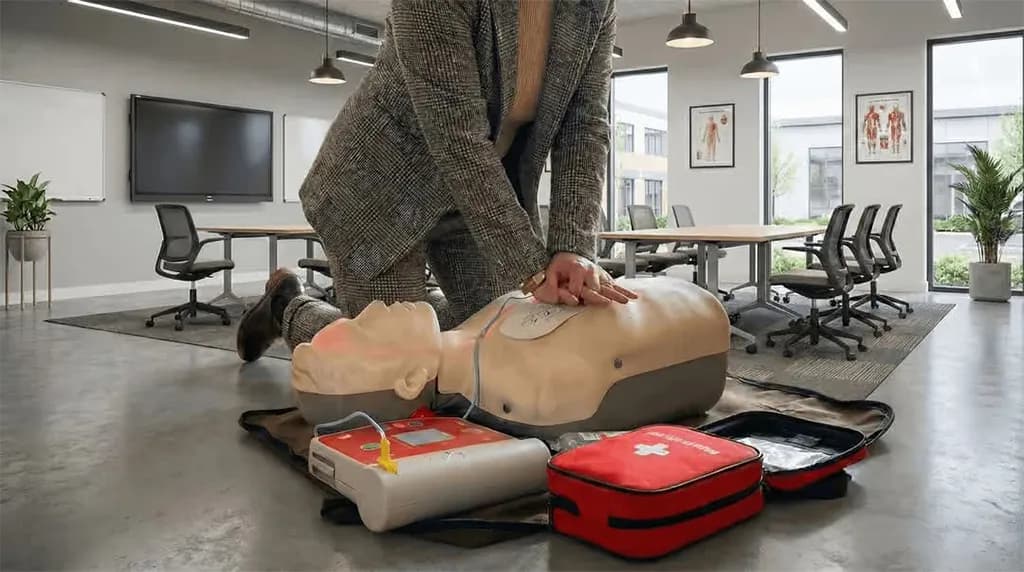
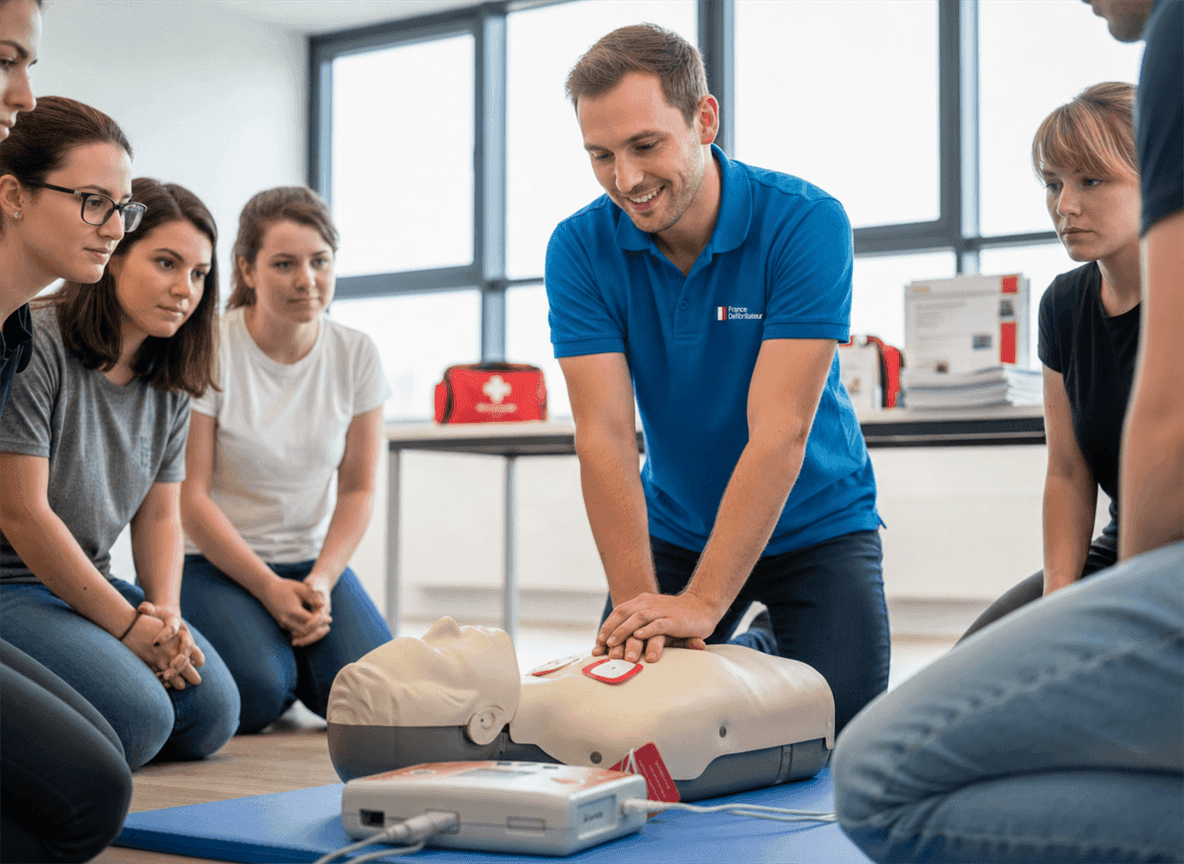
An AED is designed to be used by anyone, trained or not, since the device talks the user through every step. That does not lessen the value of designating staff referents, ideally among reception, security or HR teams, and training them in life-saving actions or first-aid at work. A team that knows where the device is and how the alert process unfolds reacts faster than one left to improvise.
Recommended refresher training for life-saving actions typically falls every two to three years, with shorter internal reminders in between. That rhythm naturally aligns with the defibrillator's own check-up: using an annual review to test the device and refresh referents' knowledge together keeps both tasks from slipping off the company's calendar.
What an AED really costs a company
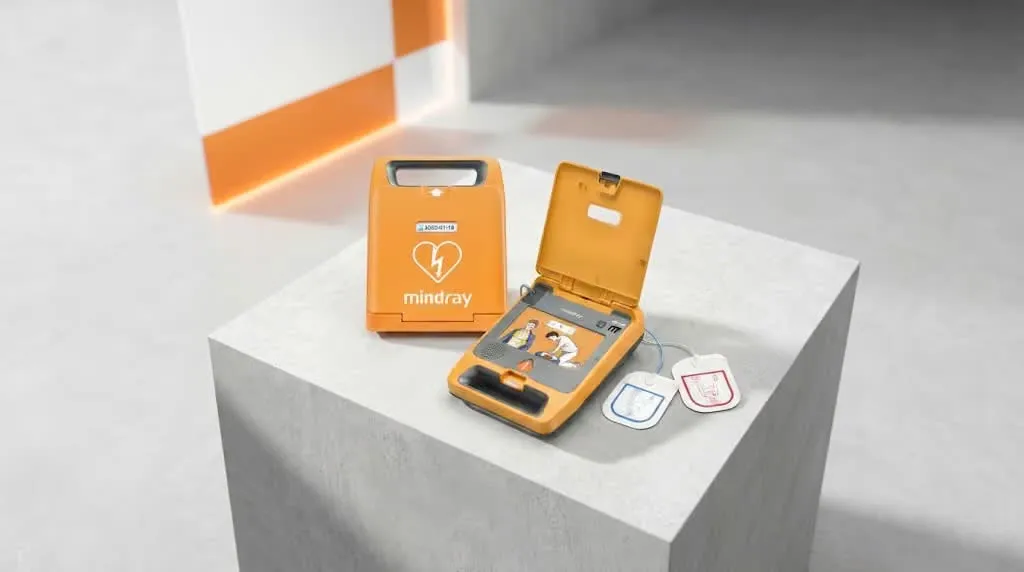
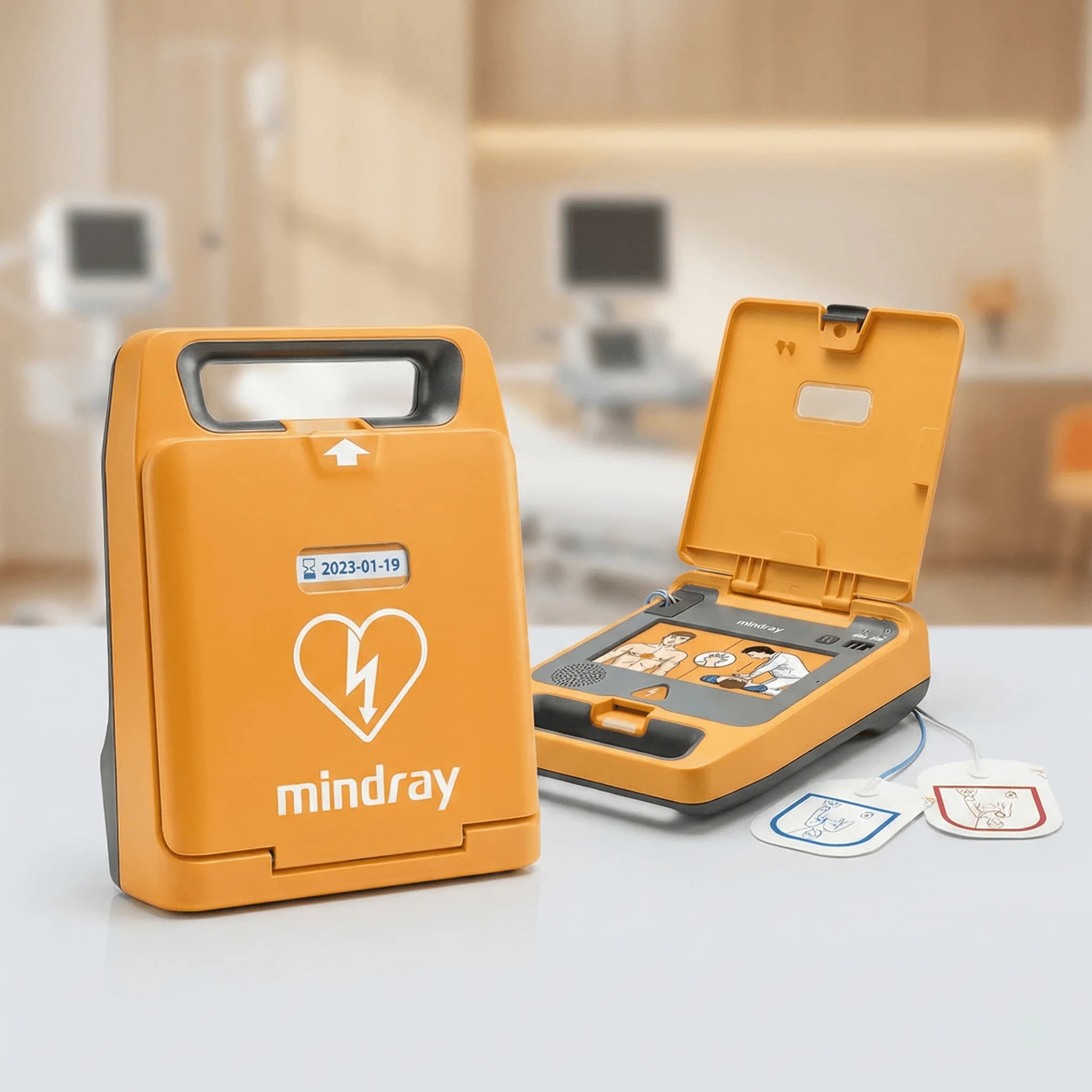
The budget for a company AED depends mainly on how it is acquired and which accessories are included. Bought outright, a complete pack with a wall cabinet, first-aid kit and signage most often costs between 1,000 and 1,500 euros, VAT included, for an automatic device. Renting starts from 50 euros a month, excl. VAT, maintenance included, which spreads the cost and avoids paying upfront for the device and its consumables.
| Item | Example price, VAT included |
|---|---|
| Maintenance and inspection log | €4.90 |
| AED signage, set of 5 panels | €24.99 |
| Indoor wall cabinet | €99 |
| Turnkey automatic defibrillator pack | €1,499 |
| Monthly rental, maintenance included | from €50 excl. VAT |
Maintenance: a responsibility that does not end with the purchase
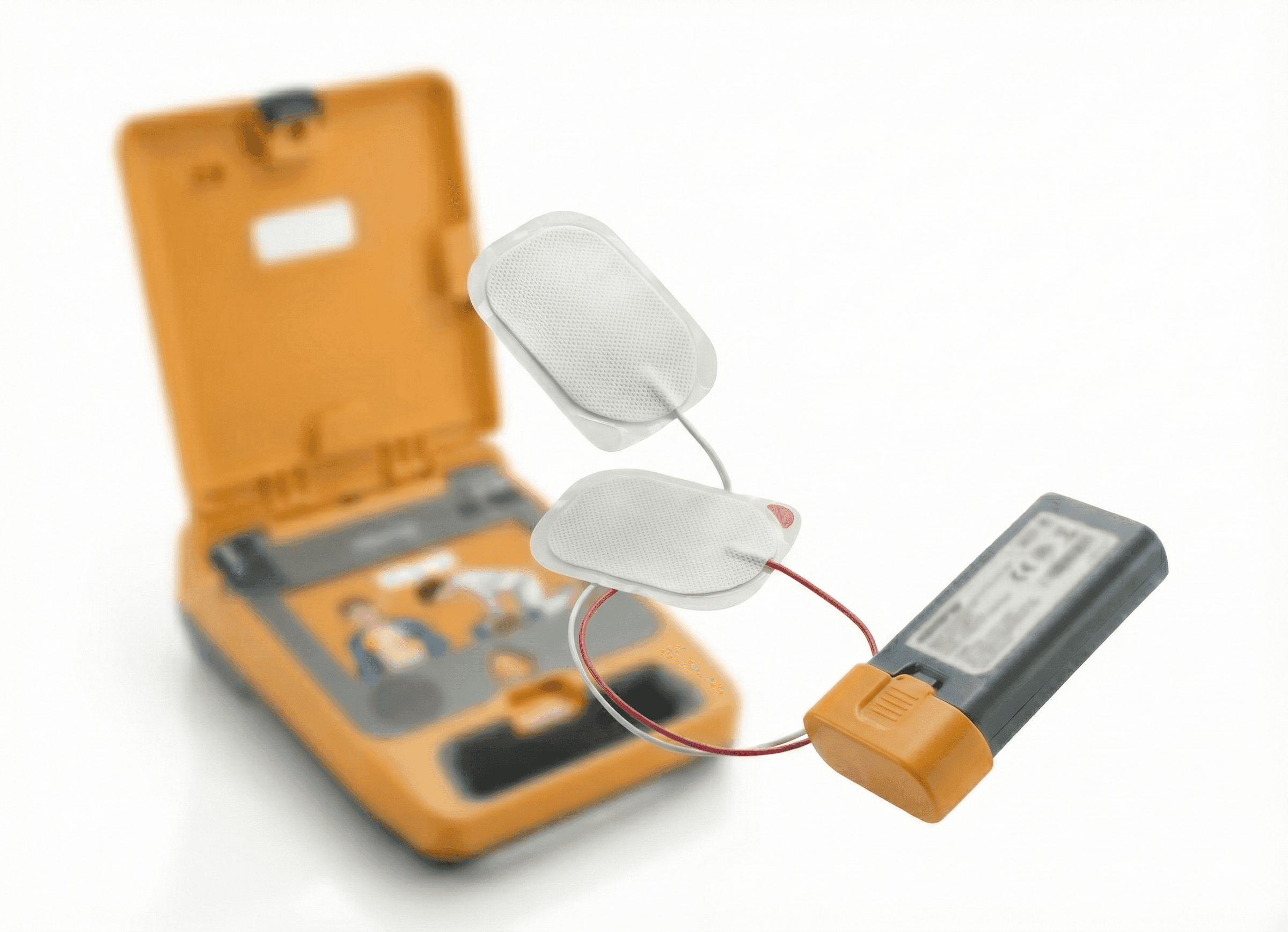
Article R. 5212-25 of the French Public Health Code places upkeep of the defibrillator on its owner, which in most cases is the company itself. Electrode pads are replaced every 2 to 5 years depending on the model, batteries every 3 to 5 years, and the device itself remains operational for 8 to 10 years or more if properly maintained. Ignoring these deadlines means owning a device that will not work on the day it is needed.
Reliable suppliers deliver within 2 to 5 business days and answer a quote request within 24 hours, two useful benchmarks to avoid letting a battery or electrode renewal slide. A company that rents its defibrillator with maintenance included and a 5-year warranty hands off a large share of that follow-up, which suits organisations without a dedicated technical team for this kind of equipment.
Frequently asked questions
Does a company that does not receive the public have to install a defibrillator?
French AED law targets establishments open to the public, not companies as such. A closed site, accessible only to badge-holding staff, falls outside its scope. Employers still carry a general safety duty toward their staff, which leads many companies to equip themselves voluntarily even without an ERP obligation.
How much does a defibrillator cost for a mid-sized office?
A complete purchased pack, with wall cabinet, first-aid kit and signage, most often costs between 1,000 and 1,500 euros, VAT included. Renting starts from 50 euros a month, excl. VAT, maintenance included, which avoids paying upfront for the device and tracking consumables over the years.
Who needs to be trained to use the defibrillator in a company?
The device talks anyone through its use, trained or not. It still helps to designate referents among reception, security or HR staff, and train them in life-saving actions or first-aid at work, with a refresher every two to three years.
What happens to a company that ignores the ERP equipment obligation?
An establishment open to the public that falls under the decree and remains unequipped risks being flagged as non-compliant during a safety commission visit, with consequences for its operation. Beyond the legal text, missing equipment also denies staff and visitors a chance of survival should a cardiac arrest happen on site.
Does a company's defibrillator need to be registered with GéoDAE?
Yes, registration in the GéoDAE database is mandatory as soon as the device is installed. It lets emergency services locate the nearest defibrillator when responding to a call, including when the emergency happens near the company rather than inside its own premises.
Planning an AED project?
Purchase, rental from 50 EUR excl. VAT per month, installation with GéoDAE registration, servicing and training: our team replies within 24 hours.