Cardiac arrest: life-saving steps and chain of survival
Written by Cyrille GAGNAIRE, France Défibrillateur. Published on 7 August 2026.
Cardiac arrest strikes around 50,000 people every year in France, most often outside a hospital. In those first minutes, it is not professional rescuers who make the difference, but the bystanders on the scene. Compressing the chest, calling for help, and using a DAE (AED, automated external defibrillator) when one is available: these simple actions, taught in just a few hours of training, greatly improve the chances of survival. Here is how the chain of survival works in practice, minute by minute.
Recognising cardiac arrest in seconds
A person in cardiac arrest collapses suddenly, stops responding, and does not react to speech or touch. Breathing stops or is reduced to gasping, noisy and irregular breaths that should not be mistaken for normal breathing. This sign still misleads many bystanders, who hesitate before acting even though every second counts.
Faced with these signs, check for a response by shaking the shoulders and speaking loudly, then watch the chest for a few seconds. If the person does not move and is not breathing normally, the chain of survival must start without delay, without checking for a pulse or waiting for medical confirmation.
Calling for help without losing a minute
In France the emergency numbers 15 or 112 should be dialled as soon as cardiac arrest is confirmed, ideally on speakerphone to keep both hands free. A precise address, a visible landmark and the number of people present help the dispatcher direct rescuers quickly and guide the bystander step by step until they arrive.
If several people are present, one calls for help while another starts compressions and a third fetches the nearest DAE, often marked by a green and white sign at the entrance of buildings. Alone with the situation, compress first and call in parallel, never interrupting compressions for more than a few seconds.
Pushing hard, pushing fast, without stopping
Chest compressions are performed at the centre of the chest, the heel of one hand on the sternum, the other hand on top, arms straight. The rate should be between 100 and 120 compressions per minute, with a depth of 5 to 6 centimetres, letting the chest rise fully between each compression so the heart can refill.
Compressions must continue without interruption until the DAE arrives or professional rescuers take over. Fatigue quickly reduces the quality of compressions: when several bystanders are present, switching every two minutes keeps the pressure steady and effective.
Using the DAE as soon as it is available
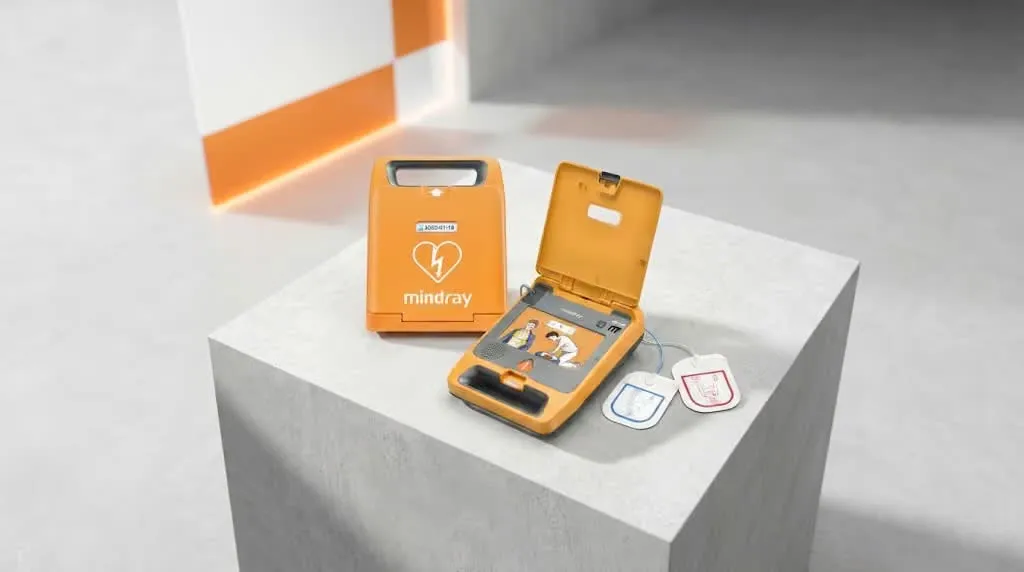
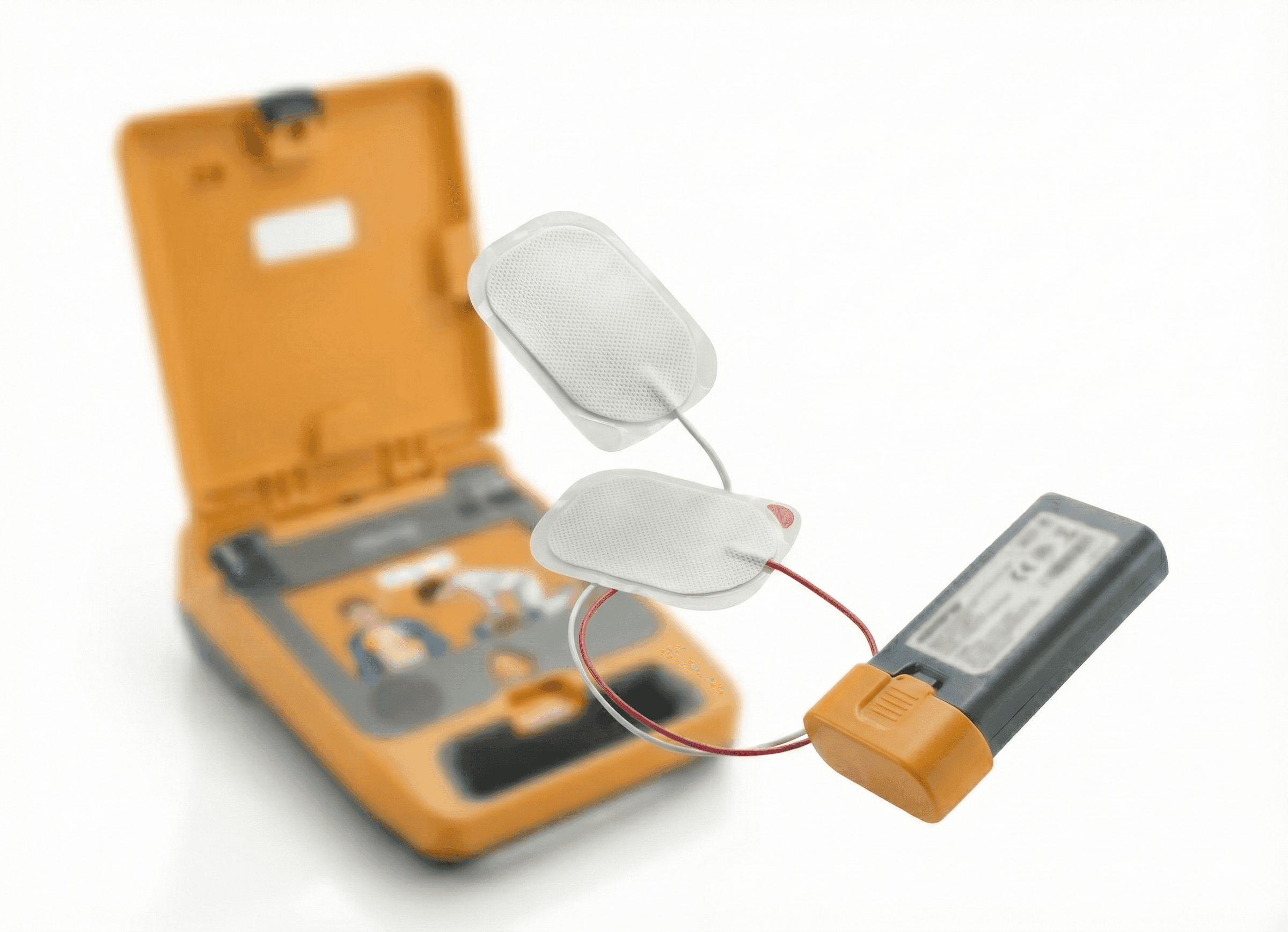
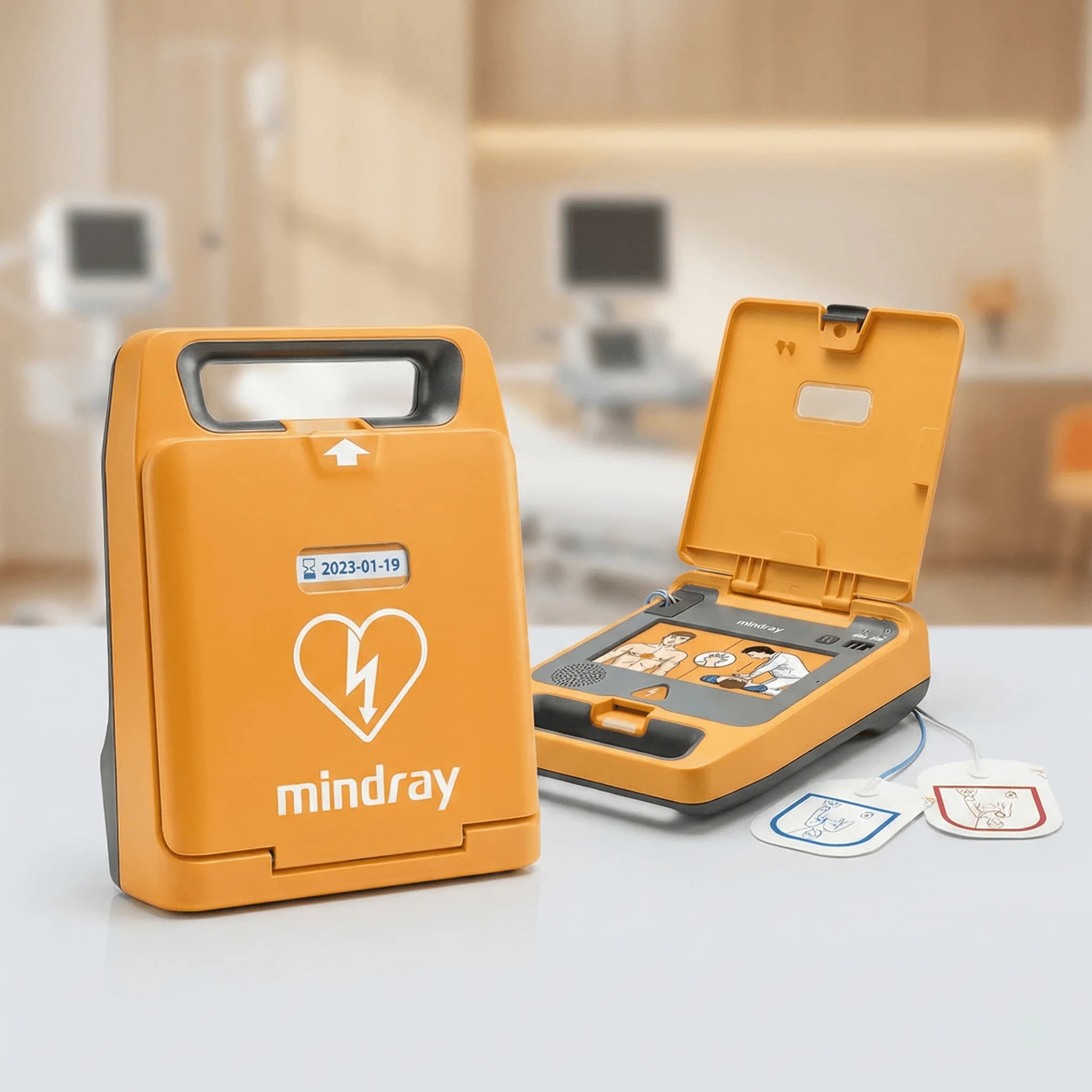
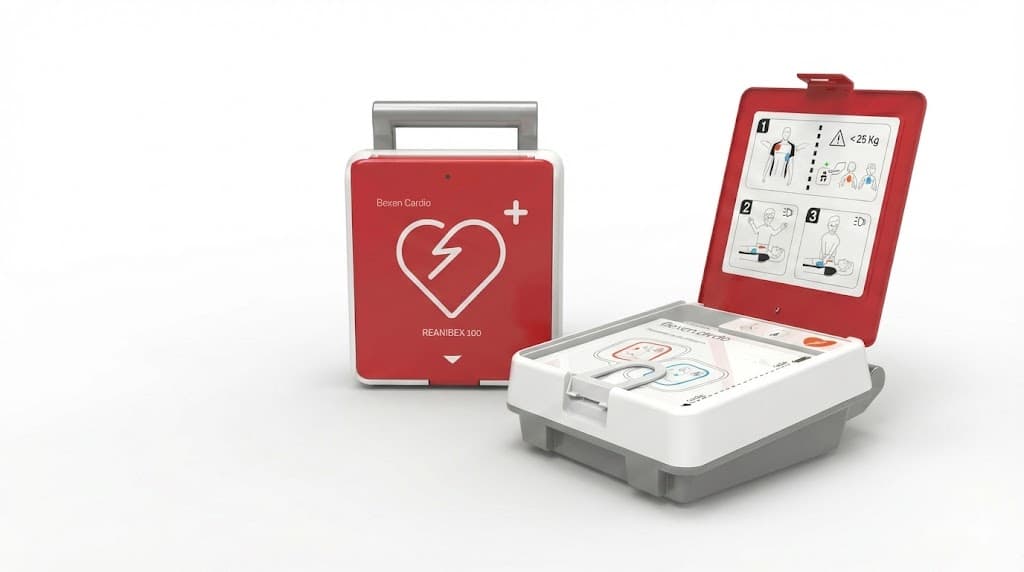
A DAE is designed to be used by anyone, without prior training. Once switched on, the device guides every step out loud: baring the chest, attaching the pads where the diagrams show, then letting the device analyse the heart rhythm.
The device only delivers a shock if the heart rhythm requires it: there is no risk in applying it to someone whose heart is beating normally. During analysis and the shock, no one should touch the victim, and as soon as the device allows it, compressions resume immediately.
The four links of the chain of survival
These actions follow a precise sequence, summed up by first responders as four inseparable links. A weak or missing link greatly reduces the chances of survival, even if the others are carried out perfectly.
| Link | Bystander action | Effect on survival |
|---|---|---|
| Immediate alert | Call 15 or 112 as soon as the first signs appear | Triggers the arrival of rescuers and guides the bystander |
| Early chest compressions | Uninterrupted chest compressions | Maintains minimal blood flow to the brain |
| Early defibrillation | Shock delivered by the DAE if the rhythm requires it | Every minute without a shock cuts survival chances by around 10 % |
| Medical care | Handover to professional rescuers | Stabilises the victim for further treatment |
Misconceptions that delay intervention
Many people think training is required to touch a DAE, or fear doing something wrong. The device is precisely designed for a non-medical public and refuses to deliver a shock unless it is necessary. Waiting for rescuers without acting, out of fear of getting it wrong, is the real risk.
Another misconception: chest compressions might break ribs, so it is better not to try. Rib fractures are possible, but they heal. The absence of compressions, on the other hand, deprives the brain of oxygen in an irreversible way within minutes. Compressing always remains preferable to doing nothing.
Training to act with confidence
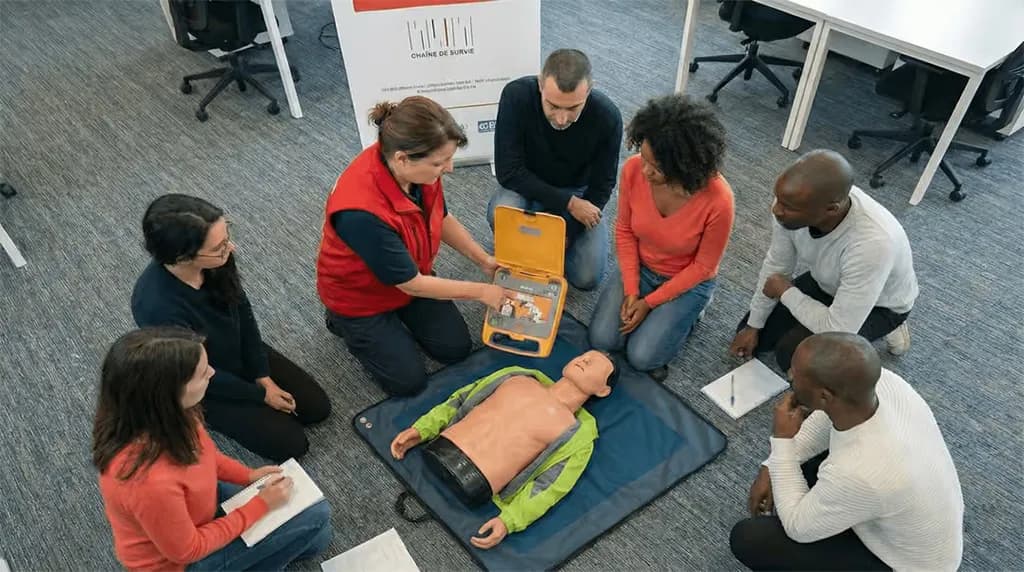
First aid training, such as public awareness sessions or the SST (the French workplace first-aid certificate), turns these steps into reflexes. A few hours are enough to practise on a manikin, compress at the right rate and handle a training DAE, without the pressure of a real situation.
In a company, a school or a sports club, it is better to train several people rather than just one, and to renew the training every two to three years to keep the actions accurate. A place where several bystanders know how to react significantly increases the chances of survival in the event of cardiac arrest.
Frequently asked questions
How much time do I have to act in case of cardiac arrest?
Every minute without compressions or defibrillation cuts the chances of survival by around 10 %. After a few minutes without action, neurological damage becomes likely even if the person survives. Compressing and calling for help as soon as the first signs appear, without waiting for medical confirmation, remains the most decisive factor.
Can a DAE be used without training?
Yes. The device is designed for a non-medical public and guides every step out loud, from placing the pads to delivering the shock. It analyses the heart rhythm and only delivers a shock if necessary, which removes any risk of error for a bystander who simply follows the voice instructions.
Should compressions continue if the victim seems to regain consciousness?
Compressions should only stop if the person breathes normally, moves and responds, or if professional rescuers take over. Partial movement or gasping does not mean circulation has been restored. When in doubt, it is better to continue compressions until a professional arrives.
Where can I find the nearest DAE?
Most establishments open to the public display a green and white sign indicating where the DAE is located. Units registered in Géo'DAE, the French national defibrillator registry, also appear on dedicated locator apps, which lets a bystander or the emergency dispatcher direct people to the nearest device quickly.
Can chest compressions make the victim's condition worse?
Rib or sternum fractures are possible, especially in older people, but they heal and do not endanger life. In contrast, the absence of compressions deprives the brain of oxygen quickly and irreversibly. The benefit of compressions far outweighs this limited risk.
Planning an AED project?
Purchase, rental from 50 EUR excl. VAT per month, installation with GéoDAE registration, servicing and training: our team replies within 24 hours.