After a resuscitation: supporting the bystander and rescuer
Written by Cyrille GAGNAIRE, France Défibrillateur. Published on 5 November 2026.
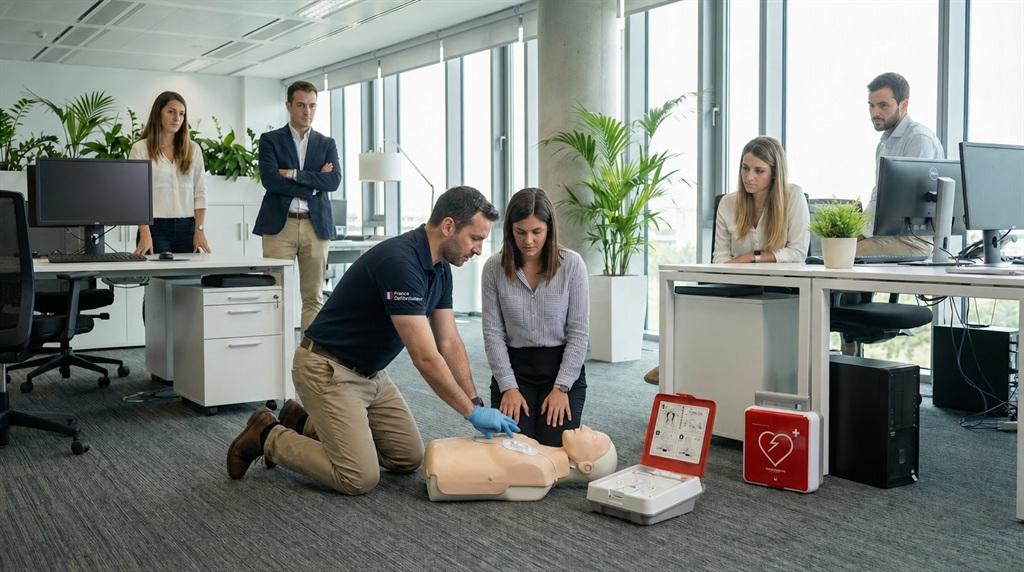
Once the patient is in the hands of the emergency services, the intervention is not over for those who carried it out. The colleague who gave compressions, the customer who placed the pads or the staff member who guided the paramedics may keep the image of the scene. In a building, the operator has every reason to plan for this moment, just like replacing consumables.
Why the aftershock exists, even when everything went well
A cardiac arrest is a brutal scene, often experienced without preparation. During the action, attention is taken up by the gestures: calling 15 or 112, compressing the chest, following the voice prompts of the device (DAE, or AED, an automated external defibrillator). Once the emergency services arrive, the tension drops at once and the questions begin.
Some rescuers replay the scene over and over, doubt the quality of their actions or wonder whether they could have done better. Others feel unusual tiredness, trouble sleeping or passing irritability. These reactions are common and are not a sign of weakness. They also affect bystanders who could do nothing, simply because they saw it.
The first minutes after the emergency services leave
The first useful reflex is not to leave the rescuer alone. Offer a seat and a glass of water, and ask how they feel before asking them to tell the story. Avoid sentences that judge the action, in either direction. Saying "you did everything right" when nobody knows yet can ring false.
Let them choose whether to talk or stay silent. If the emergency services need a statement, gather it in a single go so they do not have to repeat the scene to several people. Finally, do not send them back to their post or appointment right away if that is not necessary.
Plan very concrete gestures too: offer to call a relative, find a way for them to get home without driving if they seem shaken, leave a number to call if needed. These attentions cost little and show that the organisation does not treat the intervention as a mere incident to close.
What the operator can organise in the following days
In a company, the employer has natural contacts: the occupational physician, staff representatives, the safety officer. In a town hall, a club or a shop, the person who appointed the defibrillator contact can also act as a point of contact. What matters is that everyone knows whom to turn to without having to ask permission.
A calm conversation a few days after the event is often more useful than a meeting in the heat of the moment. It lets you thank those involved, tell them what became of the patient when the information is available and can be shared, and suggest seeing a healthcare professional to those who ask for it. Everyone remains free to accept or not.
Think also of the less visible people: the receptionist who opened the door to the paramedics, the colleague who kept onlookers back, the one who fetched the device. They contributed to the chain of survival and sometimes feel less entitled to react than the main rescuer. Naming them in the thanks avoids leaving them feeling erased.
Turning the experience into a debrief
The debrief is about the organisation, not the people. Reconstruct the timeline: when the alert was given, how long it took to bring the device, whether the route was clear, whether the signage helped. Remember that each minute without defibrillation reduces the chances of survival by about 10%, which gives these details their full weight.
This discussion also feeds training. It shows which gestures caused difficulty, which team members felt helpless and whether an extra awareness session is needed. It complements the practical procedure after use: updating the register, replacing the pads, checking the device.
What everyone can do to prepare
Preparing starts with informing. A notice or internal note explaining what the organisation does after an intervention reassures teams and removes one of the fears that hold people back from acting: being left alone with what they went through. People who are better trained and better supported dare to act more easily.
The following table summarises a simple split of roles, to be adapted to the size of the organisation.
| When | Who acts | Main action |
|---|---|---|
| Right after | A colleague or the contact person | Do not leave the rescuer alone, seat them, listen |
| In the following hours | The head of the premises | Gather statements, relieve the rescuer of their tasks |
| In the following days | Employer, operator or contact person | Calm conversation, referral to a professional if needed |
| In the following weeks | Contact person and training | Debrief and additional awareness session |
Frequently asked questions
Is it normal to sleep badly after performing chest compressions?
Yes, it is a common reaction after a striking event. If the problems last beyond a few days or get worse, it is advisable to talk to a doctor, the occupational physician or another healthcare professional, without waiting for them to settle in.
Must the employer organise follow-up for an employee who acted as rescuer?
The subject falls under general occupational health rules, to be checked with the occupational physician. In practice, a careful employer offers at least a time to listen and recalls the role of the occupational physician. What matters is that the employee knows whom to talk to and that their involvement is recognised.
Can the rescuer be told what became of the patient?
Only if the information is available and can be shared with respect for confidentiality. The emergency services or the family can sometimes pass it on. Otherwise, it is better to honestly admit that you do not know than to assume an outcome.
Should a group meeting be held right after the intervention?
Rarely. In the heat of the moment people are still tense and some do not wish to speak in front of everyone. An individual moment first, then a collective debrief a few days later on the organisation, usually gives better results.
Does this also concern people who only called the emergency services?
Yes. Whoever raised the alert, guided the paramedics or simply witnessed the scene may feel the same aftershock. They deserve the same attention as the person who performed compressions or placed the pads.
Planning an AED project?
Purchase, rental from 50 EUR excl. VAT per month, installation with GéoDAE registration, servicing and training: our team replies within 24 hours.