How much does a defibrillator cost in 2026? Real prices, consumables and rental
Written by Cyrille GAGNAIRE, France Défibrillateur. Published on 28 July 2026.
Fitting a site with a defibrillator immediately raises the question of budget. The gap between an entry-level DAE (AED) at 350 euros and a top-of-the-range model at 2,395 euros often comes as a surprise. On top of that come the consumables, pads and batteries, which have to be replaced at regular intervals. This guide sets out the price ranges recorded across our 2026 catalogue, the total cost of ownership over four to five years, the trade-off between buying and renting, and the steps to follow in order to obtain an accurate quote.
The price ranges recorded in 2026
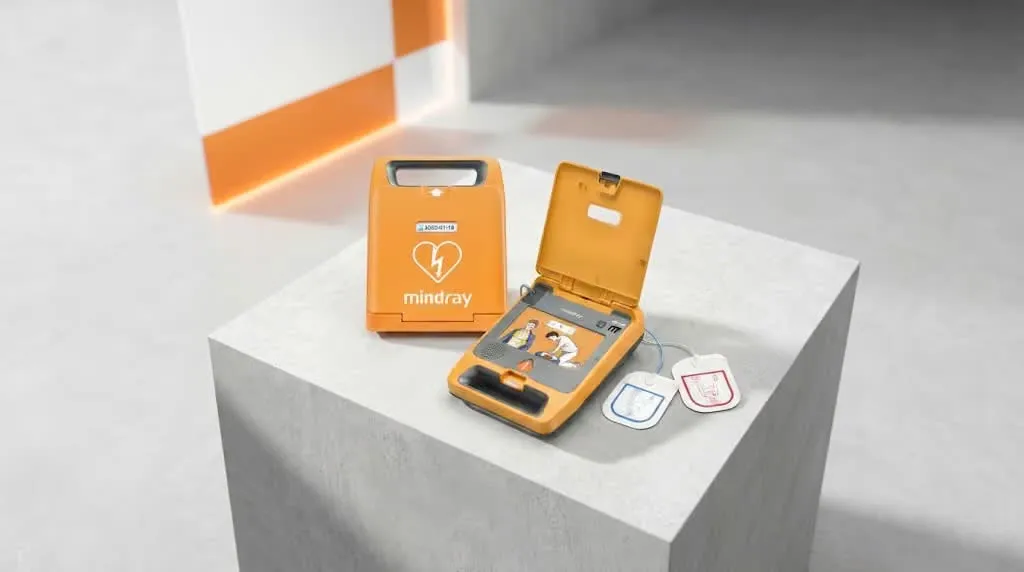
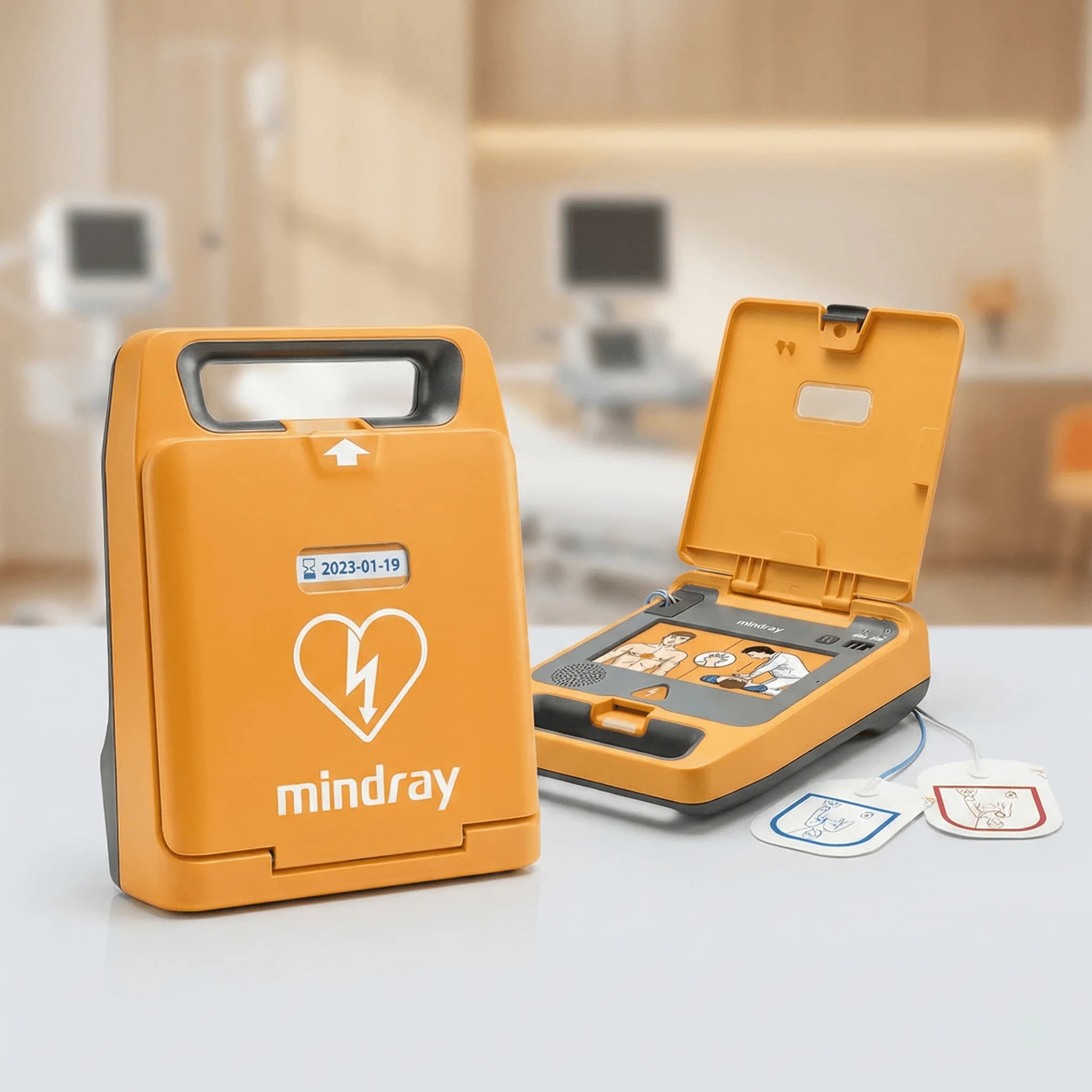
Across the France Défibrillateur catalogue, automated external defibrillators (DAE) range from 350 to 2,395 euros incl. VAT, with a median price of around 1,090 euros. This wide span reflects the difference in features between an entry-level unit and a top-of-the-range model designed for more demanding environments.
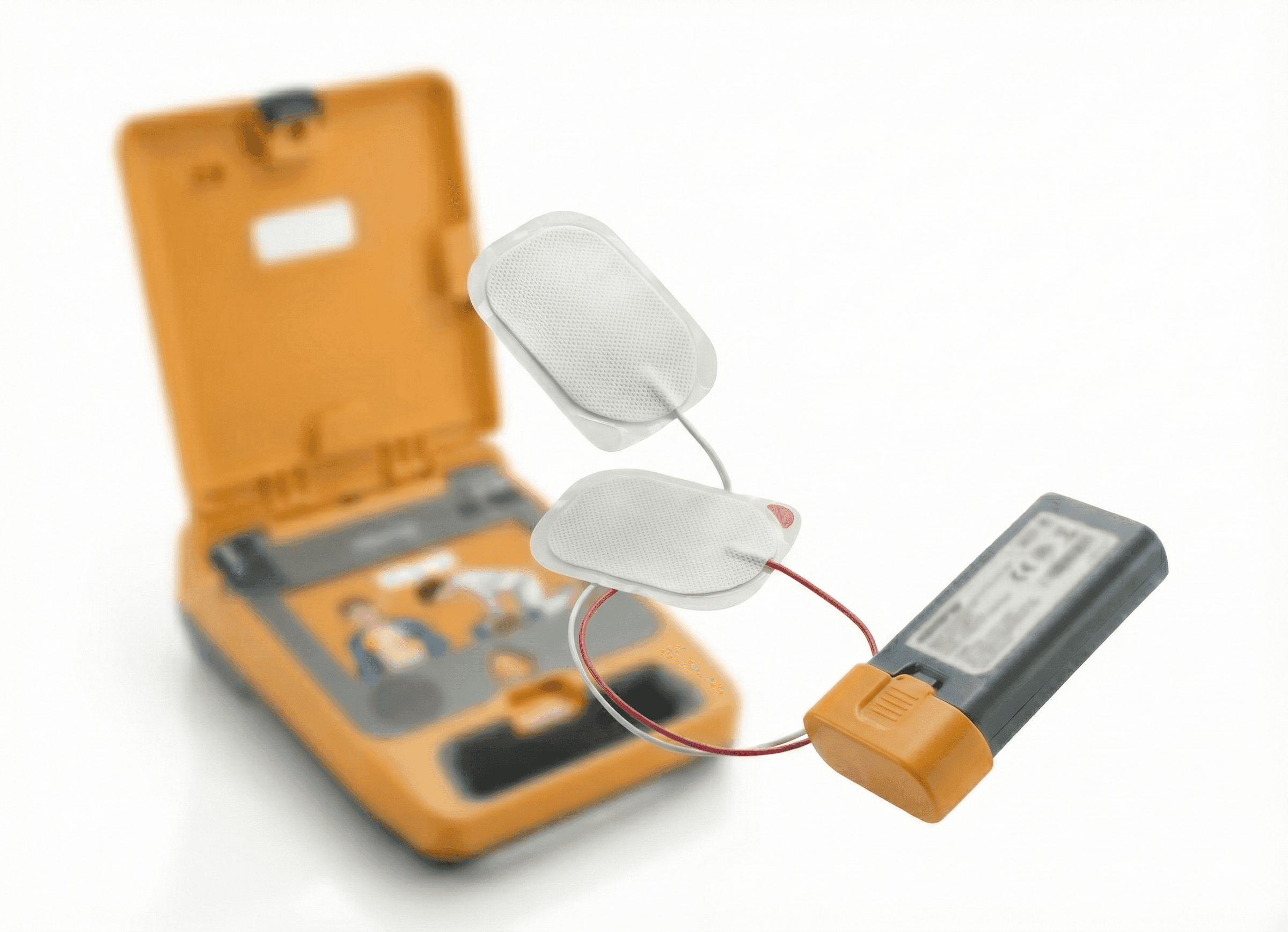
Consumables follow the same logic. Pads are priced between 14 and 239 euros, with a median of around 99 euros. Batteries run from 10 to 499 euros, for a median of around 259 euros. These parts are essential to the operation of the unit and have to be replaced periodically, which is why it makes sense to build them into your budget from the outset.
| Category | Lowest price incl. VAT | Median price incl. VAT | Highest price incl. VAT |
|---|---|---|---|
| DAE (unit only) | 350 euros | approx. 1,090 euros | 2,395 euros |
| Pads | 14 euros | approx. 99 euros | 239 euros |
| Batteries | 10 euros | approx. 259 euros | 499 euros |
What makes the price of a defibrillator vary
The first criterion is the way the shock is triggered. A DEA, a fully automatic defibrillator, delivers the shock by itself after a voice prompt. A DSA, the semi-automatic type, asks the user to press a button in order to deliver the shock. The abbreviation DAE covers both families. In either case, the unit analyses the heart rhythm and only delivers a shock when one is needed.
The installation environment also weighs on the final bill. A unit placed outdoors requires a suitable cabinet, heated if necessary, to protect it from frost, rain and temperature swings. Indoors, by contrast, a simple wall bracket is enough. Then there are the accessories: carry case, rescue kit, signage compliant with the arrêté du 29 novembre 2018 (the French order of 29 November 2018 on defibrillator signage), or an additional set of pads. Together, these items can noticeably change the final amount of the quote.
Total cost of ownership over four to five years
The purchase price accounts for only part of the outlay. Pads expire after two to five years depending on the model, even if never used, because their conductive gel dries out over time. Batteries, for their part, last three to five years. Over a period of four to five years, you should therefore allow for at least one replacement set of pads, and often a new battery as well.
Taking the median figures, that is roughly 99 euros for a set of pads and 259 euros for a battery, the consumables budget remains modest compared with the initial investment. The good news is that a well-maintained DAE will work for eight to ten years or more, which spreads the cost very comfortably. Maintenance is the responsibility of the operator (article R. 5212-25 du Code de la santé publique, the French Public Health Code): regular checks, monitoring of expiry dates and replacement of consumables.
Buy or rent: which option should you choose?
Buying suits organisations that want to keep control of their equipment over the long term. At France Défibrillateur, DAE units come with a five-year warranty and are delivered within two to five working days. It is the most economical solution over the long run, provided you take care of consumables tracking and maintenance yourself.
Rental, available from 50 euros excl. VAT a month, appeals to organisations that prefer a smoothed budget and no administration at all: maintenance and consumables are included, as is replacement of the unit after it has actually been used. This formula turns a one-off investment into a predictable monthly charge, which is an advantage for the operating budgets of local authorities and businesses alike.
A regulatory obligation for many establishments
A defibrillator budget is not simply a matter of choice: loi 2018-527 (the French law of 2018) and décret 2018-1186 (its implementing decree) require public-access buildings to be equipped. French public-access buildings (ERP) in categories 1 to 3 had to be fitted out by 1 January 2020, category 4 by 1 January 2021 and certain category 5 ERP by 1 January 2022. Each unit must then be registered on the national GéoDAE database and signposted in line with the arrêté du 29 novembre 2018.
Beyond the legal obligation, the stakes are vital. France records around 50,000 sudden cardiac arrests each year, and every minute that passes without defibrillation cuts the chances of survival by roughly 10 per cent. An accessible, ready-to-use unit is therefore never wasted spending.
Which funding routes are worth exploring?
Local councils can look into central government grants for local investment, such as the DETR or the DSIL, whose eligibility is assessed case by case with the prefecture. Some inter-municipal bodies also offer matching funds to support equipment purchases by their member councils. These routes need to be checked locally. For businesses and associations, rental often remains the simplest way to spread the cost.
How do you obtain an accurate quote?
A reliable quote rests on a few simple pieces of information: indoor or outdoor installation, the number of sites to be equipped, any training requirement, and whether you prefer to buy or to rent. France Défibrillateur undertakes to reply within 24 hours with a detailed proposal covering the unit, the accessories and the associated services.
Support can extend to installation, including fitting the signage and registering the unit on GéoDAE, as well as preventive maintenance and training for your teams. That gives you a complete view of the cost, with no unpleasant surprises, and a set-up that is genuinely operational from the moment it goes into service.
Frequently asked questions
What is the average price of a defibrillator in 2026?
In our catalogue, DAE units range from 350 to 2,395 euros incl. VAT, with a median price of around 1,090 euros. The gap comes down to the way the shock is triggered, the ruggedness of the unit and the accessories chosen, such as an outdoor cabinet. Mid-range models cover the vast majority of needs.
How much do replacement pads and batteries cost?
Pads cost between 14 and 239 euros, with a median of around 99 euros, and last two to five years depending on the model. Batteries run from 10 to 499 euros, for a median of around 259 euros, with a service life of three to five years. Allow for these replacements in your multi-year budget.
Is renting a defibrillator worthwhile?
Yes, for organisations that prefer a predictable monthly cost: from 50 euros excl. VAT a month, maintenance and consumables are included, as is replacement of the unit after use. Buying remains sensible over the long term, since a well-maintained DAE works for eight to ten years or more.
What is the difference between a DEA and a DSA?
The DEA, the fully automatic type, delivers the shock by itself after a voice prompt. The DSA, the semi-automatic type, asks the user to press a button in order to deliver the shock. Both analyse the heart rhythm and only deliver a shock when one is needed. DAE is the generic term covering these two categories.
Is my establishment required to install a defibrillator?
Loi 2018-527 and décret 2018-1186 require ERP to be equipped: categories 1 to 3 since 1 January 2020, category 4 since 1 January 2021 and certain category 5 ERP since 1 January 2022. The unit must be registered on GéoDAE and its maintenance is the responsibility of the operator.
Planning an AED project?
Purchase, rental from 50 EUR excl. VAT per month, installation with GéoDAE registration, servicing and training: our team replies within 24 hours.