CE marking and the MDR: checking that a defibrillator is compliant
Written by Cyrille GAGNAIRE, France Défibrillateur. Published on 28 July 2026.

An automated external defibrillator is not just another piece of safety equipment: it is a medical device, and since the European medical devices regulation came into force it falls within the highest risk category. For the operator buying or renting a unit, that changes the nature of the evidence to request from the supplier. Here are the practical checks to carry out before ordering, and then to keep on file in your safety records.
Why defibrillators moved up to class III
Regulation (EU) 2017/745 on medical devices, known as the MDR, was published in the Official Journal of the European Union on 5 May 2017 and has applied since 26 May 2021. Its Rule 22, in Annex VIII, explicitly places automated external defibrillators in class III, the highest risk class. That rule covers active therapeutic devices with a diagnostic function that determines patient management, which describes a DAE (AED) precisely: it analyses the heart rhythm, decides whether a shock is warranted, then delivers the energy.
Under the former Directive 93/42/EEC, these same units were class IIb. The change is not cosmetic. It brings a reinforced conformity assessment carried out by a notified body, stricter post-market surveillance and traceability through the unique device identifier, or UDI. For an operator the practical consequence is simple: a DAE sold lawfully in France must be traceable to a certificate that is still valid, and your supplier must be able to show it to you.
Reading the CE marking and the notified body number
A CE marking on its own proves nothing for a DAE. On low-risk products, the manufacturer affixes the symbol under its own responsibility. For a class III device, a notified body must be involved, and that body is identified by a four-digit number placed next to the CE symbol. A defibrillator carrying a bare CE mark, with no number, should raise an immediate red flag.
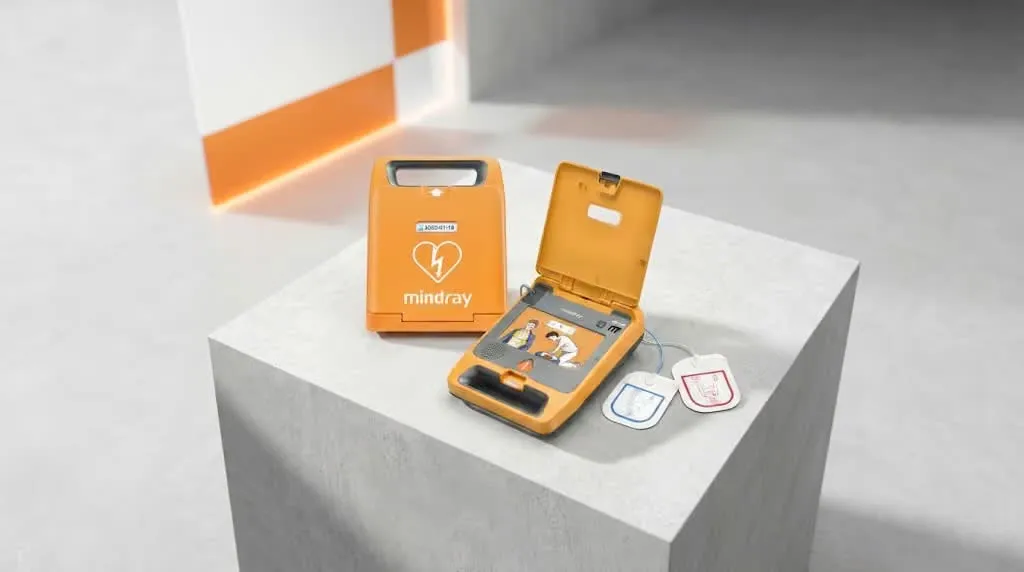
Turn the unit over or open its instructions for use and look for three items: the CE symbol followed by the four-digit number, the unique device identifier as a barcode or two-dimensional code, and the manufacturer's name with an address in the Union. Photograph that rating plate on delivery. A dated picture is worth more than a verbal assurance on the day an inspection asks where your equipment came from.

The three documents to request from your supplier
Article 14 of the regulation sets out obligations specific to distributors. Before making a device available, the distributor verifies the CE marking and the EU declaration of conformity, checks the labelling and the instructions for use in the required language, complies with the storage and transport conditions set by the manufacturer, and passes complaints and incidents on to the manufacturer. Importers are subject to comparable verifications. In other words, your seller is already required to hold these items: asking to receive them is no favour.
So insist on three documents at quotation stage, not after delivery. The manufacturer's EU declaration of conformity, naming the device and the legislation it complies with. The notified body certificate, with its expiry date and the framework it refers to, MDR or Directive 93/42/EEC. The instructions for use in French, which condition the validity of placing the device on the national market. File these documents alongside the invoice and the maintenance contract: they form the foundation of your records.
What the transition period running to the end of 2027 changes
Many units still on sale carry a certificate issued under the former directive. Regulation (EU) 2023/607 of 15 March 2023 amended Article 120 of Regulation (EU) 2017/745 to extend the transition period for these legacy devices. Class III devices, including automated external defibrillators certified under Directive 93/42/EEC, may be placed on the market until 31 December 2027, provided that the manufacturer lodged an application for assessment with a notified body before 26 May 2024 and signed a written agreement before 26 September 2024.
That extension remains conditional on continued compliance with the directives, on the absence of any significant change in the design or intended purpose of the device, and on the manufacturer having put a quality management system in place. The same text removes the sell-off deadline: devices lawfully placed on the market before the end of the transition may continue to be made available. In practice, if the unit you are offered still falls under the directive, put a single question to the seller: did the manufacturer start the procedure within the deadlines set by Regulation 2023/607? A written answer is enough.
A unit already installed after 31 December 2027
The 31 December 2027 deadline concerns placing on the market, not use. A defibrillator lawfully purchased and installed on your premises does not become unlawful on 1 January 2028 and does not have to be replaced on that ground alone. It remains usable as long as it is kept in working order in line with the manufacturer's instructions, which your maintenance contract and safety register must be able to demonstrate.
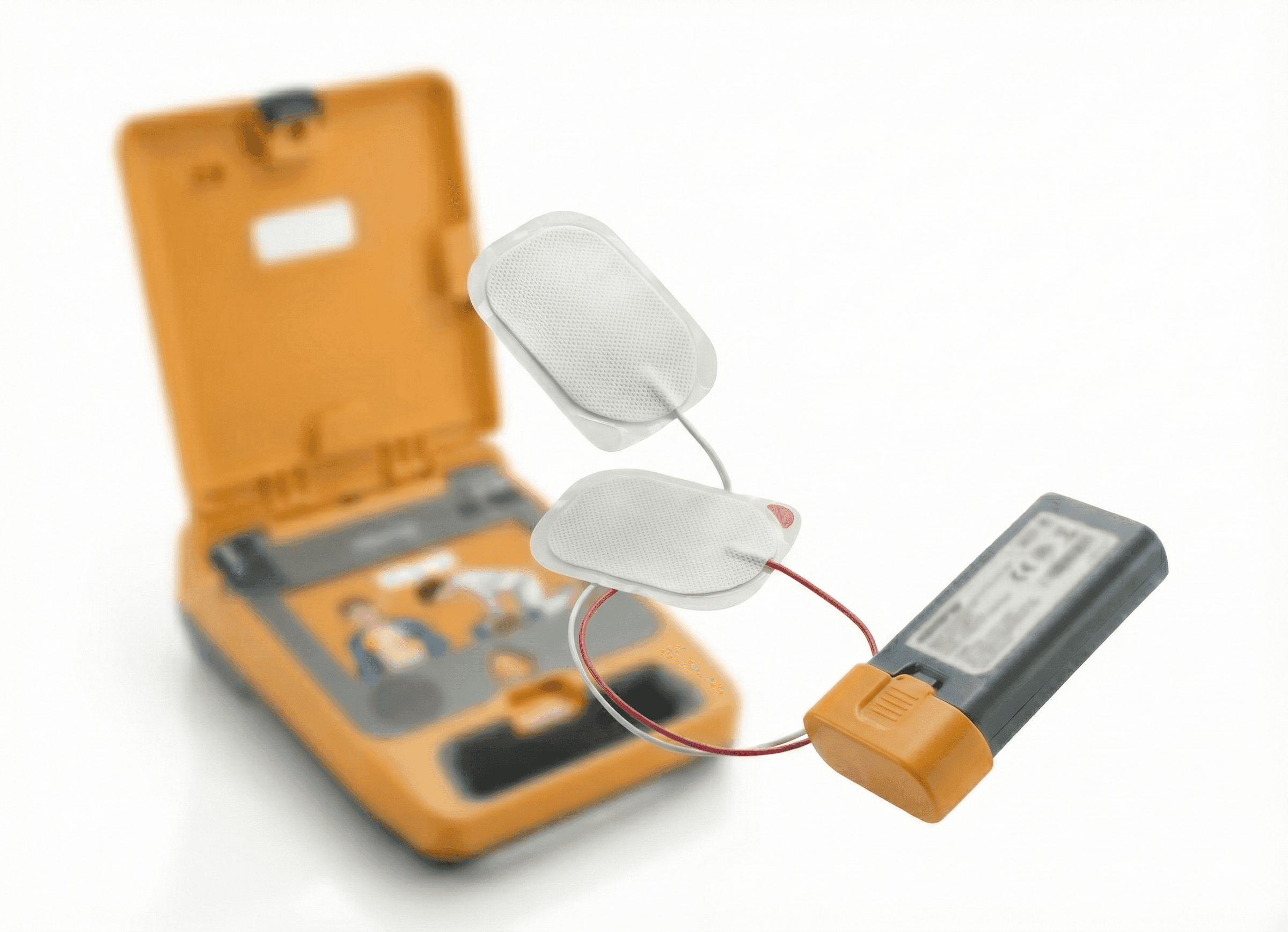
The real risk is logistical. A model that does not make it through the transition eventually drops out of catalogues, and its pads and batteries go with it, since they are specific to each unit. Pads are replaced every 2 to 5 years and batteries every 3 to 5 years, whereas a DAE lasts 8 to 10 years and often longer. If your unit is approaching 8 years of service in 2028, check the stated availability of consumables now. This question plays out differently depending on how the device is held, a subject we cover in our articles on the lifespan of a defibrillator and on choosing between renting and buying: with rental from 50 euros excl. VAT per month including maintenance, renewing the fleet is the provider's responsibility, not yours.
Recording the evidence in the safety register
French public-access buildings (ERP) have been progressively equipped since 1 January 2020 for categories 1 to 3, since 2021 for category 4 and since 2022 for certain category 5 premises. An inspection rarely looks at the mere presence of the unit: it checks that the device is identified, maintained and documented. The table below lists the information to consolidate for each unit.
Keep this record up to date after every intervention and every change of consumable. The day a notified body, a manufacturer or an authority issues a field safety notice about a model, the one thing that will save you time is knowing within thirty seconds whether you are affected. It is also what allows your provider to schedule replacements before a failure rather than after one.
| Information to record | Where to find it | When to update it |
|---|---|---|
| Brand, model, serial number | Rating plate on the unit | On commissioning |
| CE marking and notified body number | Rating plate or instructions for use | On commissioning |
| Unique device identifier (UDI) | Barcode on the unit or its packaging | On commissioning |
| Framework of the certificate (MDR or directive) | Notified body certificate | At purchase, then when the certificate is renewed |
| Expiry date of the pads | Label on the pad pouch | At every replacement, every 2 to 5 years |
| Battery replacement date | Label on the battery | At every replacement, every 3 to 5 years |
| Dates of checks and interventions | Maintenance provider's report | At every visit |
Frequently asked questions
Is a CE marking without a four-digit number acceptable on a DAE?
No. An automated external defibrillator falls within class III under Rule 22 of Annex VIII to Regulation (EU) 2017/745, which requires a notified body to be involved in the conformity assessment. The four-digit number following the CE symbol identifies that body. Its absence justifies putting the order on hold and asking the supplier for a written explanation.
What does the 31 December 2027 date mean for a buyer?
Regulation (EU) 2023/607 of 15 March 2023 allows class III devices certified under Directive 93/42/EEC to be placed on the market until 31 December 2027, subject to conditions relating to steps taken by the manufacturer. After that date, those models can no longer be placed on the market. It does not require you to replace a unit already purchased and installed.
Does a defibrillator certified under the former directive need replacing?
Not on that ground alone. A unit lawfully placed on the market remains usable as long as it is maintained in line with the manufacturer's instructions. The point to anticipate is the availability of pads and batteries, which are specific to each model. A DAE lasts 8 to 10 years and often longer, whereas these consumables are renewed every 2 to 5 years.
Which documents should be requested before signing a quotation?
Three documents cover the essentials: the manufacturer's EU declaration of conformity, the notified body certificate with its validity date and the framework it refers to, and the instructions for use in French. Article 14 of Regulation (EU) 2017/745 already requires the distributor to verify these items, so your request simply formalises a check that already exists.
Does renting remove the need for these checks?
It shifts them. The provider remains bound by the distributor obligations set out in Article 14, and maintenance as well as fleet renewal fall to them, from 50 euros excl. VAT per month including maintenance. You still have every reason to record the model, the serial number and the intervention dates in your safety register, because it is your premises that will be inspected.
Planning an AED project?
Purchase, rental from 50 EUR excl. VAT per month, installation with GéoDAE registration, servicing and training: our team replies within 24 hours.