Defibrillators in Schools: Requirements and Pediatric Pads
Written by Cyrille GAGNAIRE, France Défibrillateur. Published on 3 August 2026.
A school welcomes dozens, sometimes hundreds, of children and adults every day, which makes it a public building subject to the same safety rules as any other. Cardiac arrest rarely affects a child, but when it happens on school grounds, every minute counts just as much as anywhere else. Equipping the school with a suitable defibrillator, with pediatric pads on hand, makes a real difference to a child's chances of survival.
A school is still a public building
Schools, middle schools and high schools fall under the classification of buildings open to the public, known in France as ERP (établissement recevant du public), with a category that depends on the number of people they accommodate. ERP categories 1 to 3 have been required to have a defibrillator since 1 January 2020, category 4 since 2021, and part of category 5 since 2022, under the French loi 2018-527 (law) and its décret 2018-1186 (implementing decree). Many primary schools, for lack of sufficient headcount, fall into category 5: they can still choose to equip themselves, especially when they run a before or after school club, a canteen or extracurricular activities that increase actual attendance.
The head of the establishment, whether run by a town, a department, a region or a private body, is responsible for checking the ERP category and applying the resulting requirement. Town councils and local authorities that run primary schools have every interest in folding this into their overall safety policy, alongside the fire evacuation drills already held every term.
What changes when the victim is a child
A child's heart responds differently to an electric shock than an adult's, owing to lower body mass and different chest resistance. An automated external defibrillator, or DAE (AED), delivers an energy level calibrated for an adult by default. Used without adjustment on a child under eight years old or under 25 kilograms, that energy can be excessive, though this does not rule out using the device when no alternative is on hand.
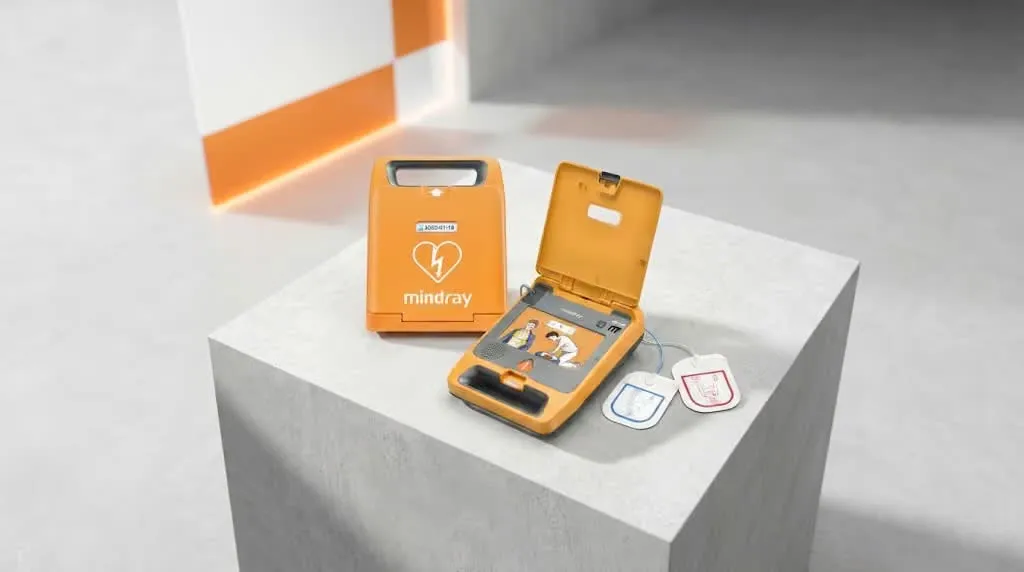
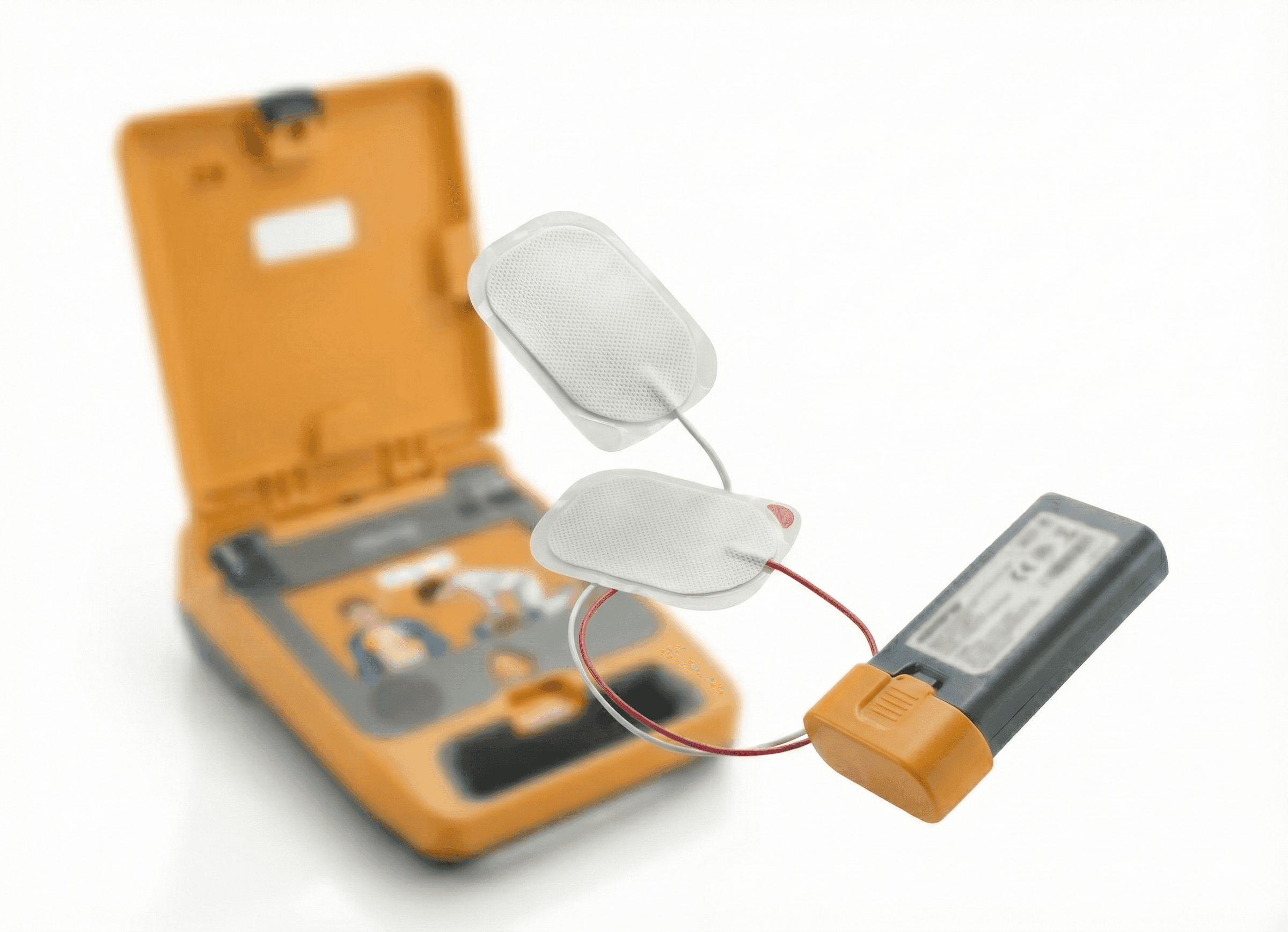
Manufacturers have addressed this with pediatric pads or energy attenuator keys, which automatically reduce the shock delivered. Some devices use a single pair of universal pads for adults and children, others need a dedicated pair or a specific key inserted before use. A school that equips itself should therefore check that its defibrillator has this option and that the pediatric pair stays accessible, stored near the device and within its expiry date.
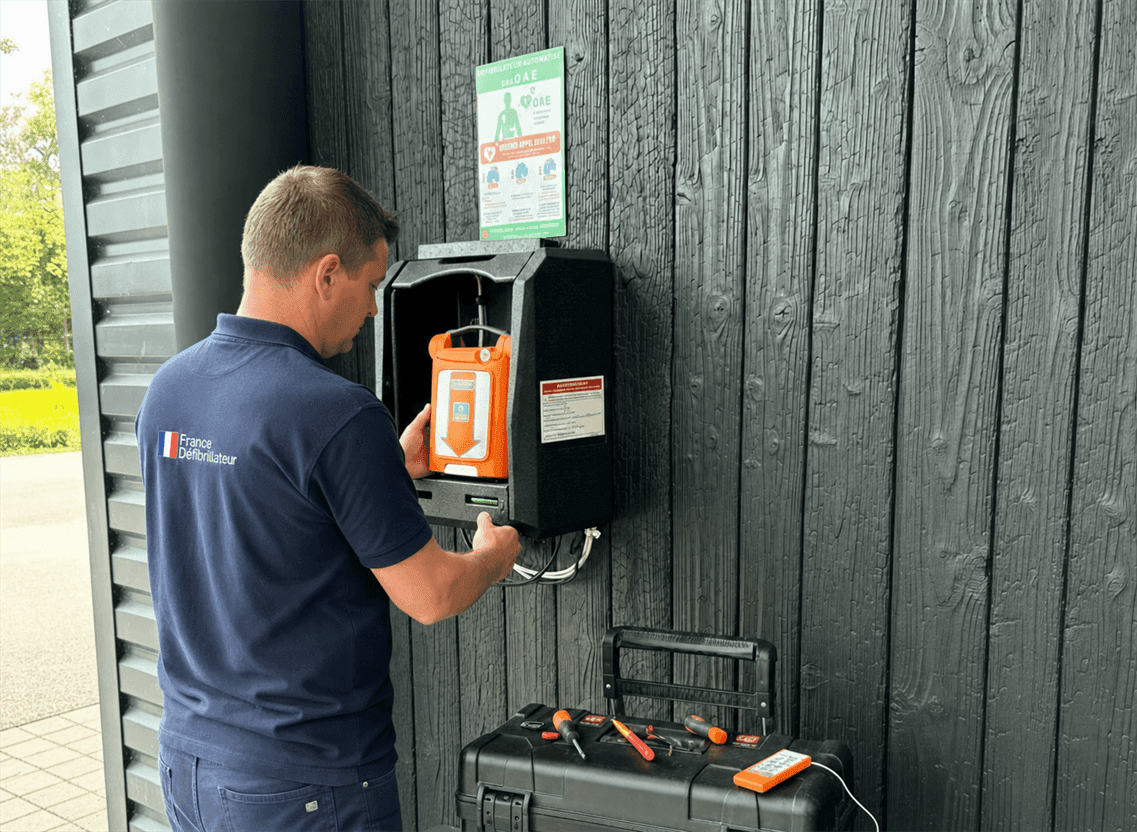
Choosing a device and pads suited to a school
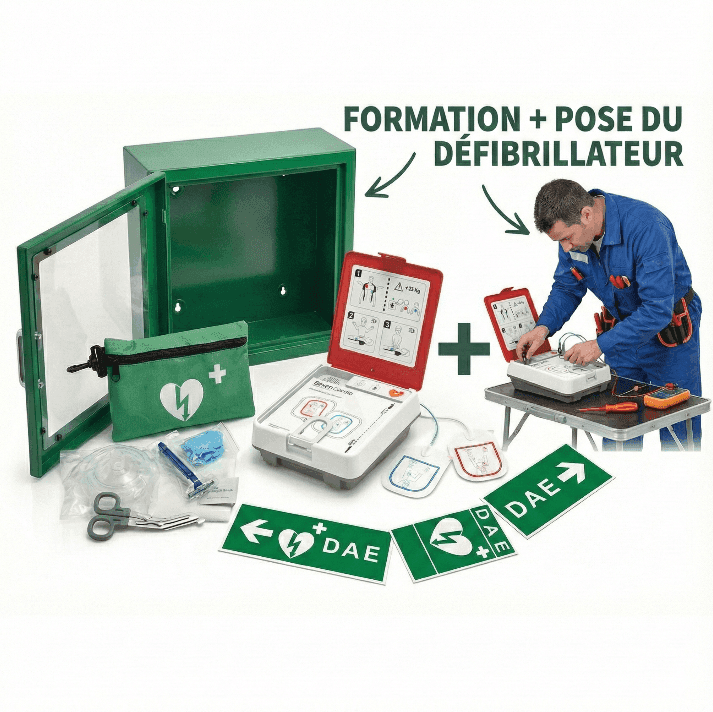
The current catalogue offers pediatric pads or attenuator keys ranging from about 65 to 174 euros including tax, depending on the brand and the defibrillator model already installed, with a spare pair added to the one supplied at purchase. For a first turnkey setup including the defibrillator, first aid kit, wall cabinet, signage and training, the available packs range from 1090 to 1499 euros including tax. A school that prefers to limit the initial outlay can also choose rental, available from 50 euros excl. VAT per month with maintenance included, backed by a 5 year warranty and delivery within 2 to 5 working days.
| Item | Price range including tax |
|---|---|
| Pediatric pads or attenuator key (spare pair) | 65 to 174 euros |
| Turnkey defibrillator pack for a school | 1090 to 1499 euros |
| Monthly rental, maintenance included | from 50 euros excl. VAT per month |
Training staff at the school
Having a defibrillator on site does not remove the need to train the adults present in the school. Teachers, canteen staff, after school activity leaders and maintenance staff are all people who might step in before help arrives. Basic life saving training, or a fuller first aid course for safety officers, helps remove the hesitation to use the device on a child.
An automated external defibrillator guides the user by voice at every step, including the choice of pediatric pads where the device allows it. That guidance does not lessen the value of regular sessions, ideally repeated every school year, so that chest compressions and switching the device on become reflexes shared among several adults in the school rather than resting on a single person.
Keeping the device maintained over time
Like any defibrillator, a school's unit remains the operator's responsibility for maintenance, under article R. 5212-25 (French public health code) of the Code de la santé publique. Pads need replacing every 2 to 5 years depending on the model, the battery every 3 to 5 years, and the device itself stays usable for 8 to 10 years or more as long as the self test light stays green. A designated staff member should check that light regularly, especially after school holidays when the building stays closed for several weeks.
Registering with Géo'DAE remains compulsory for any defibrillator installed in a place open to the public, schools included, so that emergency services can locate the nearest device when a call comes in. The signage posted at the entrance and in corridors must follow the model set by the arrêté du 29 novembre 2018 (French ministerial order), visible to staff as well as to parents or outside visitors.
Where to install the defibrillator on school grounds
The chosen spot needs to stay accessible at all times, including outside class hours if the school runs a morning club or an evening study group. The entrance hall, near the head teacher's office or the caretaker's lodge, is often a good compromise between visibility and protection against vandalism. An outdoor heated cabinet makes sense if the nearest permanently accessible point sits outside the buildings, for instance near the covered playground or the gate onto the yard.
In a school spread across several buildings or floors, it is better to equip each zone rather than rely on too long a round trip in an emergency. Time lost crossing a yard or climbing a floor can cancel out the benefit of an otherwise well chosen device.
Frequently asked questions
Is a primary school required to have a defibrillator?
It depends on its ERP category, calculated from the number of people it accommodates. Most primary schools fall into category 5, covered by the requirement since 2022 only for certain establishments in the strict sense. When in doubt, the local authority in charge can check the exact category with the fire safety services and choose to equip the school even without a strict obligation, as many towns already do.
Do children need different pads?
Ideally yes. A pediatric pair or an attenuator key lowers the energy of the shock delivered, better suited to the build of a child under 25 kilograms. Failing that, adult pads remain usable rather than forgoing defibrillation altogether, but a school benefits from keeping a pediatric pair available right next to the device.
Who should be trained at a school equipped with a defibrillator?
As many of the adults present during the day as possible: teachers, canteen staff, after school activity leaders, maintenance and supervision staff. Short, regularly renewed basic life saving training is enough to remove reluctance and ensure a trained person is nearby whatever the time of day.
How much does fully equipping a school cost?
A turnkey pack with defibrillator, wall cabinet, signage and training ranges from 1090 to 1499 euros including tax depending on the model chosen. Rental remains an alternative from 50 euros excl. VAT per month with maintenance included, which avoids the upfront outlay and hands consumable tracking over to the provider.
Does the defibrillator need to be signposted outside the school?
Yes, signage complying with the arrêté du 29 novembre 2018 (French ministerial order) must let anyone, including visitors from outside the school, spot the device quickly. Registration with Géo'DAE completes this by giving emergency services the exact location during a call, which speeds up care before medical teams even arrive.
Planning an AED project?
Purchase, rental from 50 EUR excl. VAT per month, installation with GéoDAE registration, servicing and training: our team replies within 24 hours.