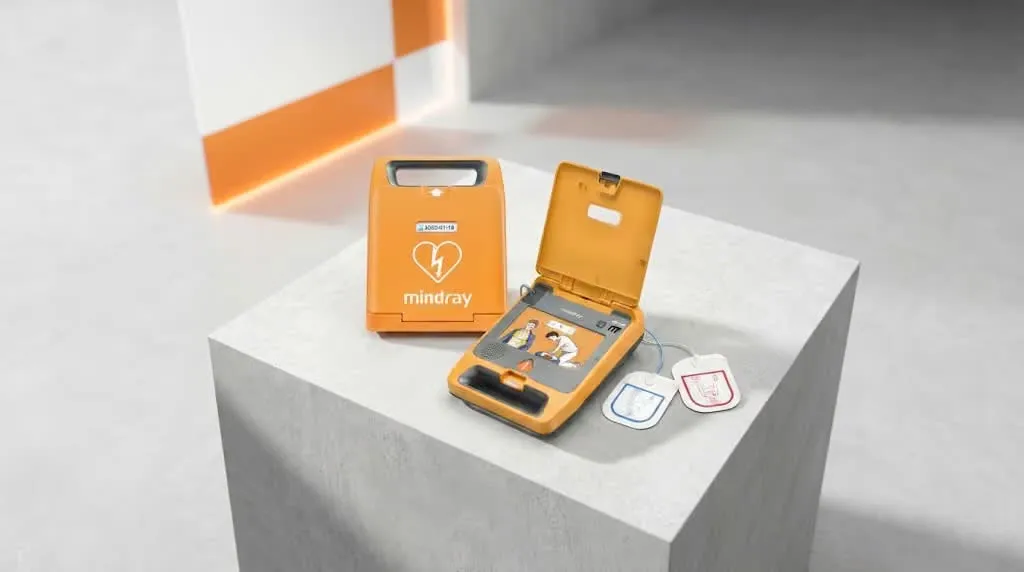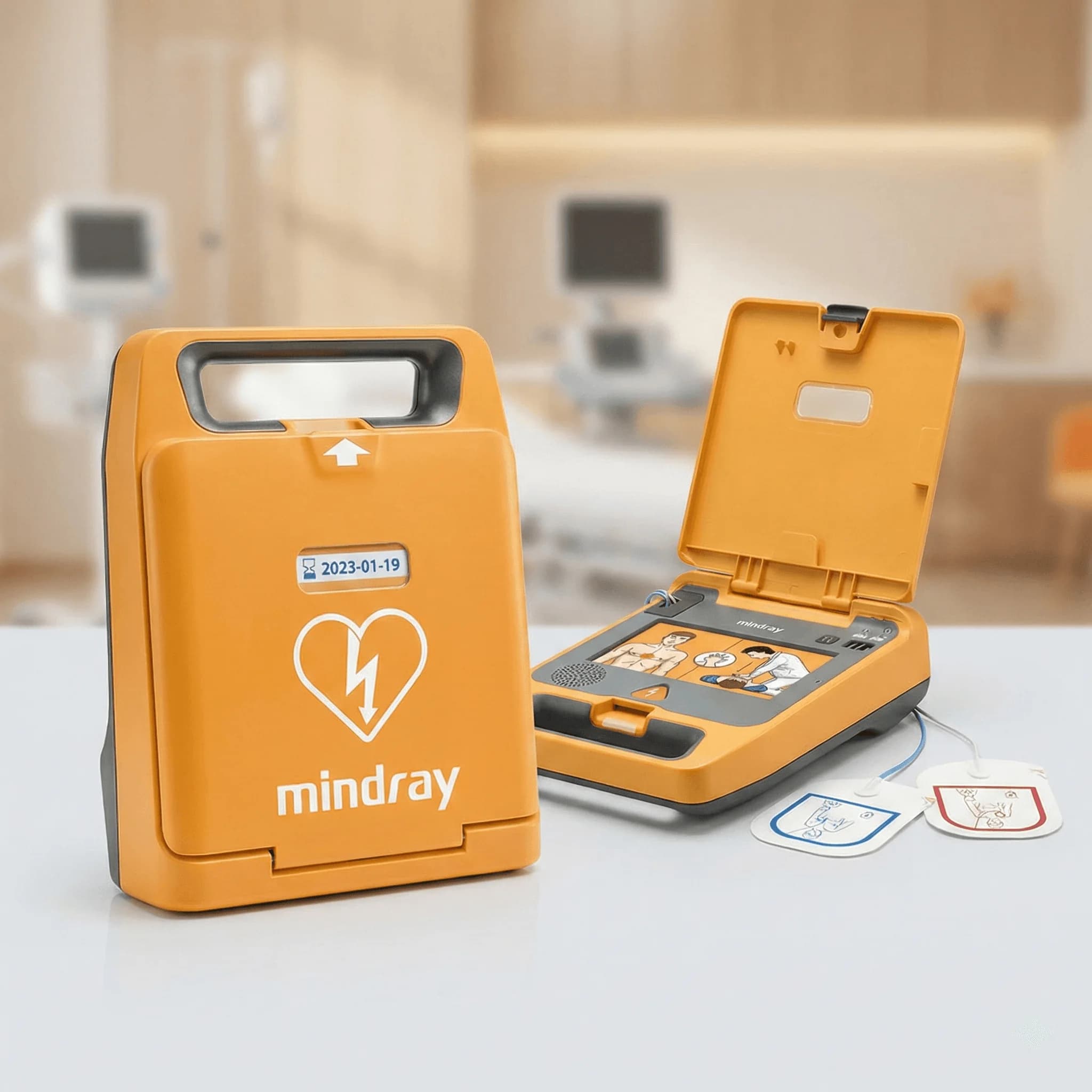
Defibrillator in a training centre: obligations and organisation
Written by Cyrille GAGNAIRE, France Défibrillateur. Published on 6 October 2026.
A training centre or training provider welcomes trainees of all ages every day, along with trainers, outside speakers and sometimes exam candidates. Classrooms, workshops and break areas gather many people over long opening hours. When a cardiac arrest occurs, every minute counts. Here is how to approach the question of the defibrillator: status of the premises, location, upkeep and preparation of the teams.
Is a training centre required to have a defibrillator?
A training centre that receives trainees and visitors generally falls under the regime of establishments open to the public, known in France as ERP (établissements recevant du public). This classification depends on the type of activity and on the capacity, all occupants included. The obligation to install an automated external defibrillator, or DAE (AED), stems from loi 2018-527 and décret 2018-1186 (the 2018 French law and decree): ERP of categories 1 to 3 have been equipped since 1 January 2020, category 4 since 2021, and some category 5 ERP since 2022.
If your organisation rents rooms in a shared building, the question of responsibility arises. You need to identify who is the operator of the ERP in the regulatory sense, since that person carries the equipment and maintenance obligation. When in doubt, a written exchange with the owner or the site manager avoids grey areas.
Varied audiences, risks not to be underestimated
Around 50,000 people suffer a cardiac arrest each year in France, without warning and regardless of age or profile. In a training centre you meet young apprentices, adults retraining, employees sent on courses and experienced trainers. The mix of audiences makes the event unpredictable.
Practical training adds particular situations: physical effort in workshops, exam stress, long days in sometimes crowded rooms. Without claiming that these contexts cause a cardiac arrest on their own, they justify having an accessible device, because each minute without defibrillation reduces the chances of survival by about 10%.
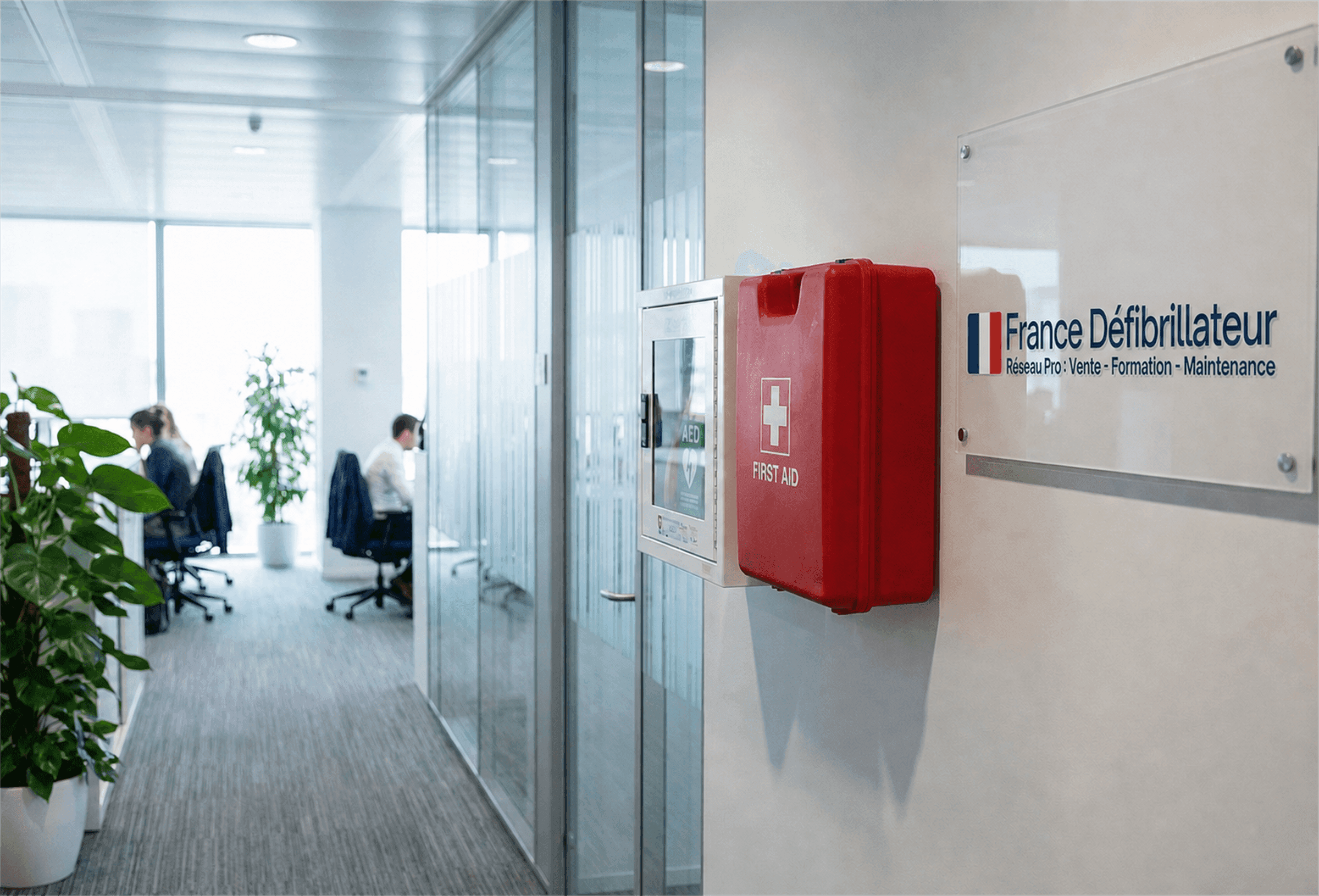
Where to place the defibrillator in the premises
The device must be visible, accessible at all times during opening hours and quick to reach from any room. A reception desk or entrance hall often meets these criteria, provided the route does not cross locked doors. On a site with several buildings or floors, a single device may not be enough.
Signage must comply with the arrêté du 29 novembre 2018 (the French ministerial order of 29 November 2018): a pictogram at the device location and arrows from the main circulation routes. The cabinet, indoor or outdoor depending on the layout, protects the equipment while keeping it accessible. Do not forget the registration in GéoDAE, which is mandatory, so that emergency services can locate the device.
Upkeep and maintenance: who is in charge
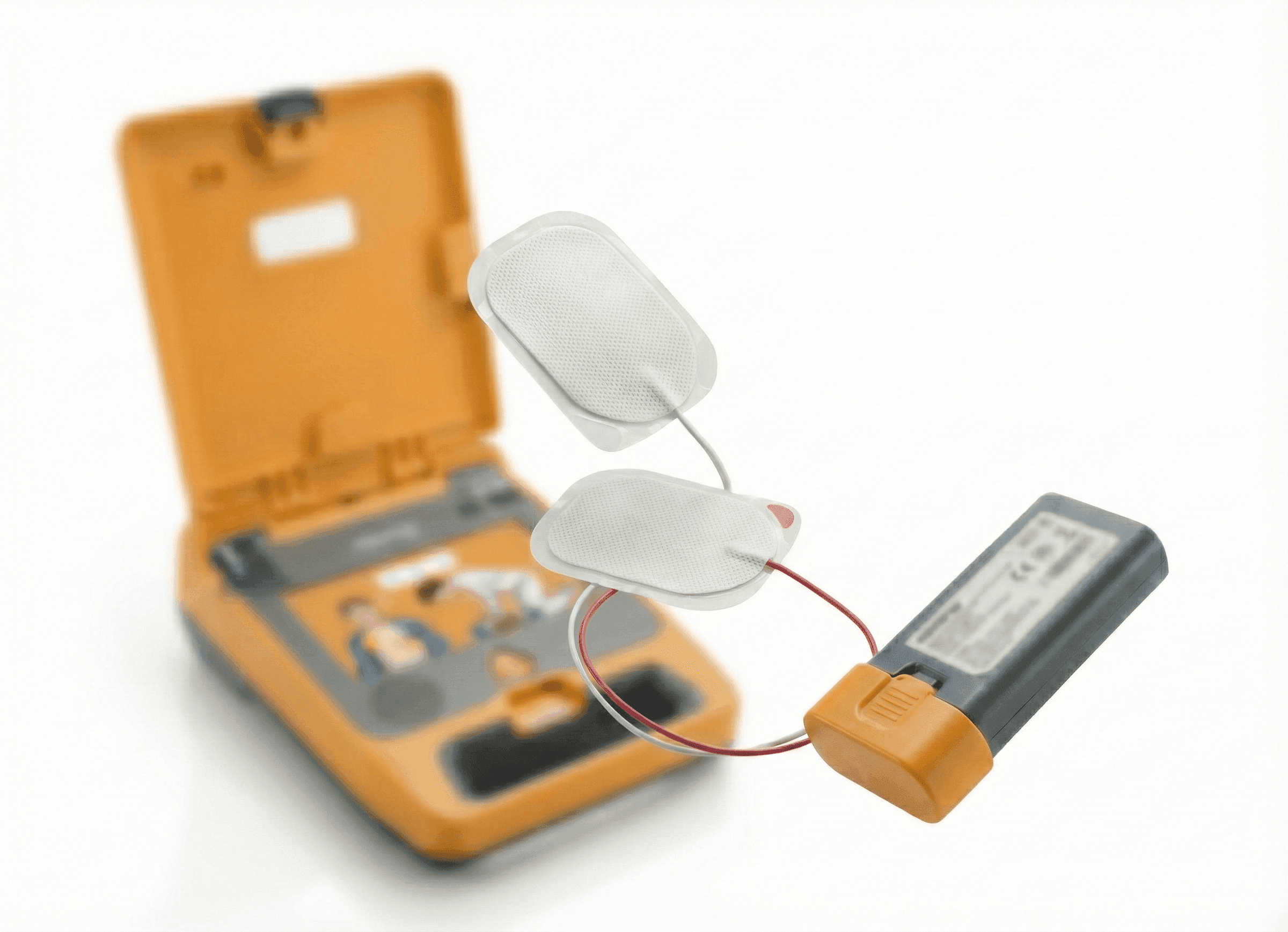
Maintenance is the operator's responsibility, in accordance with article R. 5212-25 du Code de la santé publique (the French Public Health Code). In practice this means regularly checking the condition of the device, tracking expiry dates and replacing consumables on time. Electrodes last 2 to 5 years, batteries 3 to 5 years, and the DAE (AED) itself 8 to 10 years and more.
A referent appointed within the team, for example the administrative management or the facilities manager, must check the self-test indicator and record the checks in a log. To avoid oversights during holiday periods, the maintenance contract can cover this follow-up. With rental, from 50 € excl. VAT per month, maintenance is included.
| Item | Indicative lifespan |
|---|---|
| Electrodes | 2 to 5 years |
| Battery | 3 to 5 years |
| Defibrillator (DAE) | 8 to 10 years and more |
Training trainers and administrative staff
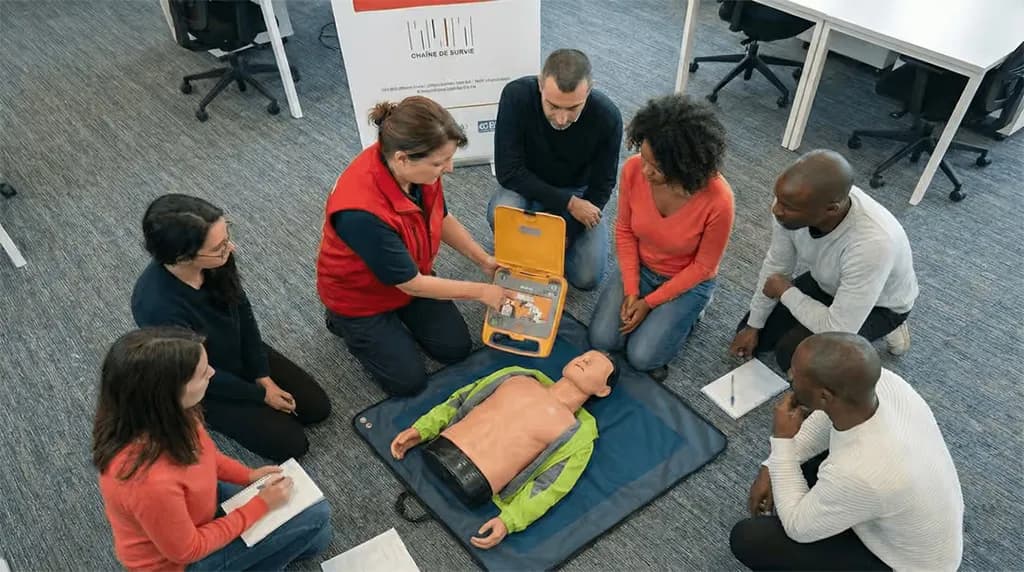
A training centre has one advantage: it knows how to organise sessions. Offering its own teams an awareness course on life-saving gestures, or a workplace first-aider course (sauveteur secouriste du travail), prepares everyone to react: alert the emergency services, perform chest compressions and use the DAE (AED). The defibrillator is designed to be used by a non-professional, but preparation reduces hesitation.
It is useful to include the device in the induction of new trainers and to remind trainees, during the tour of the premises, where the device is. An annual simulation exercise, with a call to the emergency services and retrieval of the device, keeps the right reflexes sharp.
Buy or rent for a training site
Buying suits organisations that prefer to control their own fleet and manage consumables themselves, with a 5-year warranty. Rental, from 50 € excl. VAT per month with maintenance included, suits those who want a smoothed budget and delegated follow-up, especially when the centre has several sites.
In both cases, allow delivery within 2 to 5 working days. A quote is provided within 24 hours, which makes it possible to compare the options quickly before deciding, without waiting for the next start of the academic year.
Frequently asked questions
Must a training centre have a defibrillator?
It depends on the ERP classification and the category of the site. Categories 1 to 3 have been concerned since 2020, category 4 since 2021 and some category 5 ERP since 2022. Even where the obligation does not apply, equipping the premises remains a sensible prevention measure.
Who is responsible for the defibrillator in a shared building?
The ERP operator carries the equipment and maintenance obligation. In a shared building, you must determine in writing who plays this role, whether the owner, the manager or the occupying organisation, so that upkeep does not end up without anyone responsible.
Should all trainers be trained to use the DAE?
No training is required to use a DAE (AED), since the device guides the user by voice. An awareness course or a workplace first-aider course nevertheless strengthens confidence and speed of action, especially for teams in daily contact with trainees.
How long do the electrodes and battery last?
Electrodes are generally replaced every 2 to 5 years and the battery every 3 to 5 years, depending on the model. The defibrillator itself often lasts 8 to 10 years and more. The dates are shown on the consumables and on the device.
Can a defibrillator be rented for a training centre?
Yes, rental is offered from 50 € excl. VAT per month, maintenance included. It avoids the initial investment and relieves the team of consumables tracking. A quote is provided within 24 hours to compare with purchase depending on the size of the site.
Planning an AED project?
Purchase, rental from 50 EUR excl. VAT per month, installation with GéoDAE registration, servicing and training: our team replies within 24 hours.